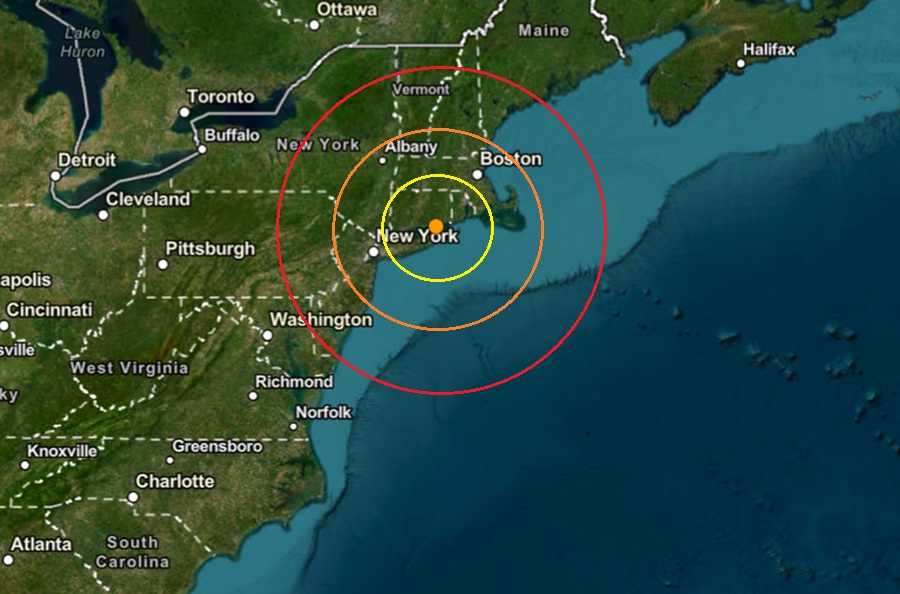
Connecticut was rattled by a weak earthquake during the afternoon on Wednesday. According to USGS, at 1:53 pm, a weak magnitude 1.6 earthquake struck the central shore near Niantic from a depth of 8.4 km. The earthquake was far too weak to create any damage or injuries.
According to USGS, earthquakes with a magnitude of 2.0 or less are rarely felt or heard by people, but once they exceed 2.0 , more and more people can feel them. While damage is possible with magnitude 3.0 events or greater, significant damage and casualties usually don’t occur until the magnitude of a seismic event rises to a 5.5 or greater rated event.
Connecticut experiences intraplate earthquakes which means its seismic activity is not directly tied to active plate boundaries like those along the U.S. West Coast or in the Caribbean. Instead, Connecticut earthquakes are caused by ancient, deep bedrock faults reactivated by regional crustal stress. Because New England’s hard bedrock transmits seismic energy very efficiently, shaking can be felt over an area four to 40 times larger than a similar-sized quake in the West.
While severe or damaging earthquakes are rare, the state has a history of low-level swarms and minor events, especially around the East Haddam/Moodus area and parts of eastern Connecticut like Plainfield and Wauregan, there have been significant with historical events reaching up to magnitude 4.4–5.0.
Authorities in the state such as the Connecticut Department of Emergency Services and Public Protection advise residents to take the following steps to prepare for seismic events there:
-Secure Home Hazards: Fasten heavy or tall furniture, bookshelves, and appliances to walls. Store heavy items, glass, and china on lower shelves. Keep flammable or hazardous liquids safely stored in closed, latched cabinets on bottom shelves.
-Build an Emergency Kit: Maintain a supply kit containing non-perishable food, a multi-day supply of water, a flashlight, a battery-powered radio, a whistle, and a fire extinguisher.
-Identify Safe Spots: Figure out safe locations in each room of your home (such as under sturdy tables or away from windows, heavy glass, and tall objects that could fall). Practice “Drop, Cover, and Hold On” drills with family members.
-Know Utility Controls: Learn how to quickly shut off your home’s main gas, water, and electricity supply valves in case of leaks or damage.
– Establish a Communications Plan: Create a family emergency plan that designates an out-of-state contact and a clear meeting place if family members are separated.
