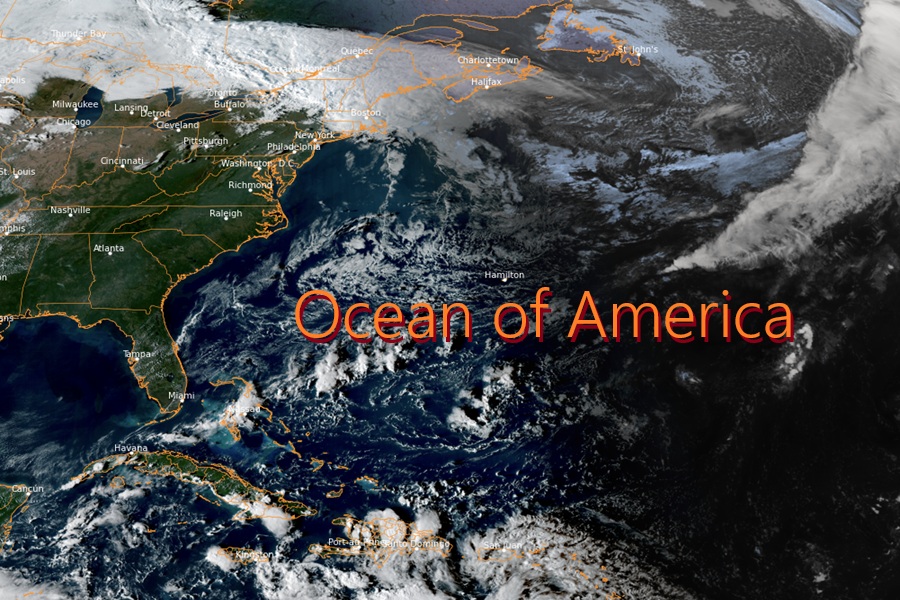
The Atlantic Ocean may bear a new name even before the Atlantic Hurricane Season ends in November. President Donald Trump said he’s considering renaming the ocean to “Ocean of America” although wasn’t sure if the Pacific or the Atlantic would get the name change. Trump has initiated many renaming endeavors in the U.S., reverting some places to their previous names or launching entirely new names. While the President can write Executive Orders making the change possible, it is another board that reviews and approves name changes for places inside and outside of the United States.
During a rally in Tennessee on Saturday, the president discussed his renaming efforts for Lake Ontario and the Gulf of Mexico which are now both officially known as Lake America and the Gulf of America.
“So, we need a river, we need an ocean. So, I was thinking of either the Atlantic or the Pacific,” Trump told the crowd at the rally.
The Board of Geographic Names which is responsible for making names of places official, completed their efforts to update their systems to reflect the new names previously pitched by Trump. With the Board of Geographic Names making their final decision and implementation, private sector and government agencies are busy updating their systems to do the same. Google and Apple were among the first companies to update their internet-based map products.
One entity obligated to accept the new names is the National Oceanic and Atmospheric Administration and their agencies like the National Weather Service and the National Hurricane Center.
In a memo released last month by the National Weather Service (NWS) headquarters in Silver Spring, Maryland, they wrote, “NWS is in the process of implementing Executive Order 144422, Honoring the American History of the Great Lakes and Renaming Lake Ontario as Lake America.” The NWS said work is underway to update naming conventions “as quickly as possible: on online maps, weather products, websites, and other materials across the National Weather Service. They add, “Caution will be exercised to avoid disruptions to operations.” Similar efforts were done in February 2025 when the Gulf of Mexico officially became the Gulf of America.
But not everyone likes the changes and some are taking their dissatisfaction out on the weather community which is obligated to use the correct, updated names.
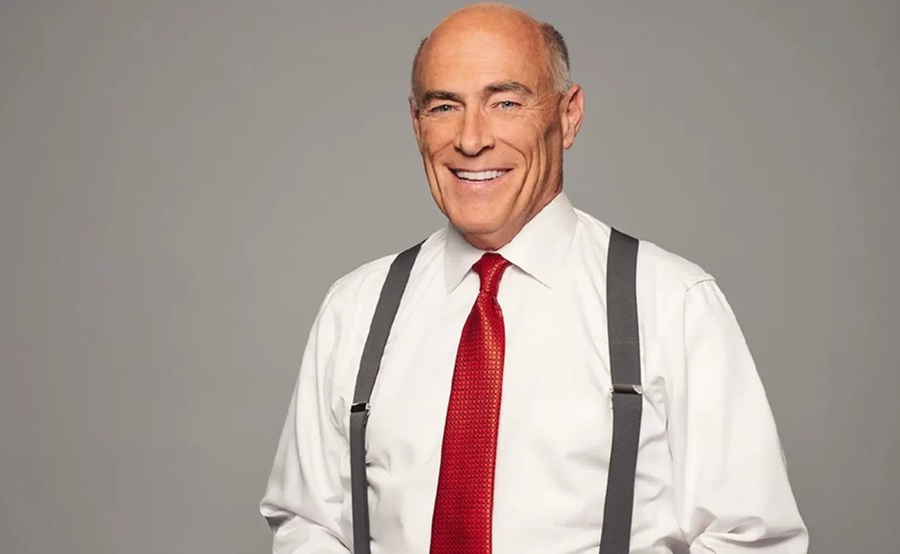
Meteorologist James Spann, a broadcast meteorologist and host of the weather-related “WeatherBrains” podcast, says he was attacked online because he referred to the body of water south of Alabama by its proper name.
Spann took to X to explain the confrontation he faced; he wrote, “Earlier this morning, I posted the tropical weather outlook from the National Hurricane Center, which referred to the “Gulf of America”. He said he ” immediately received some nasty messages from people calling me everything from some type of `phobe’ to a `racist’.”
“In an ocean of mindless intolerant political extremists that are not capable of critical thinking, they are always looking for a reason to attack someone, I guess this isn’t surprising,” added Spann.
Spann is the Chief Meteorologist for ABC 33/40 (WBMA-LD), the ABC affiliate in Birmingham, Alabama. Spann has been with the station since 1996. In 2006, he started hosting the weekly weather podcast “WeatherBrains.” In 2025, he also founded the “Alabama Weather Network” which provides weather coverage for the entire state of Alabama. He holds an AMS Certified Broadcast Meteorologist seal.
Spann said that during last hurricane season that he made the mistake “of calling it the `Gulf of Mexico’, and was quick called a `libtard’ and `communist’.”
The dust-up with calling the Gulf of America by its proper name isn’t the first time Spann has encountered online vitriol. In 2024, Spann attempted to debunk misinformation being spread online about Hurricane Milton but shared his frustration over a “society full of hate, anger, rage, and the inability to think clearly.
When Spann shared a link to a FEMA page which debunked rumors around Hurricane Helene, he encountered additional hostility.
“I pass along information from officials with zero comment. I have no interest in politics. But the threats I have received from posting this are not good. Some I turned in. Some of the most hateful messages I have received come from people with Bible verses all over their profile. It is clear that we live in a society full of hate, anger, rage, and the inability to think critically. It has been very tough today, and all I do is pass along information. If you hate me, that is fine, but you might want to pull down those verses and your church affiliation. It isn’t a good look.”
President Trump isn’t the first President to change the official places around the U.S. and the World. And not every country adopts the changes made by the United States.
The river that runs between Mexico and the United States has had a long-running naming dispute that has gone on for hundreds of years. The name Rio Grande was first given to the river in 1598 by the Spanish explorer Juan de Oñate when he arrived at its banks near present-day El Paso. Before de Oñate, Spanish explorer Antonio de Espejo in 1582 referring to the “River of the North” as Rio del Norte. While the United States continues to refer to it as the Rio Grande, Mexico officially refers to it at Rio Bravo or Rio Bravo del Norte in a nod to de Espejo.
Another name disputed by foreign governments is for the body of water that stretches between China and the Phillipines. While China refers to it as the South Sea or Nanhai, the Philippines refer to it as the West Philippine Sea. In the United States, the name it officially uses for the body of water is “South China Sea”; it uses this name in all diplomatic, military, and legal terminology.
Names inside the U.S. have also changed. Im 2015, the Obama administration changed the name of Mount McKinley to Denali. In 2025, Trump reverted it back to its original name. In 1963, Cape Canaveral was renamed to Cape Kennedy in reaction to the assassination of President John F. Kennedy. But officials reverted it back to Cape Canaveral in 1973.
