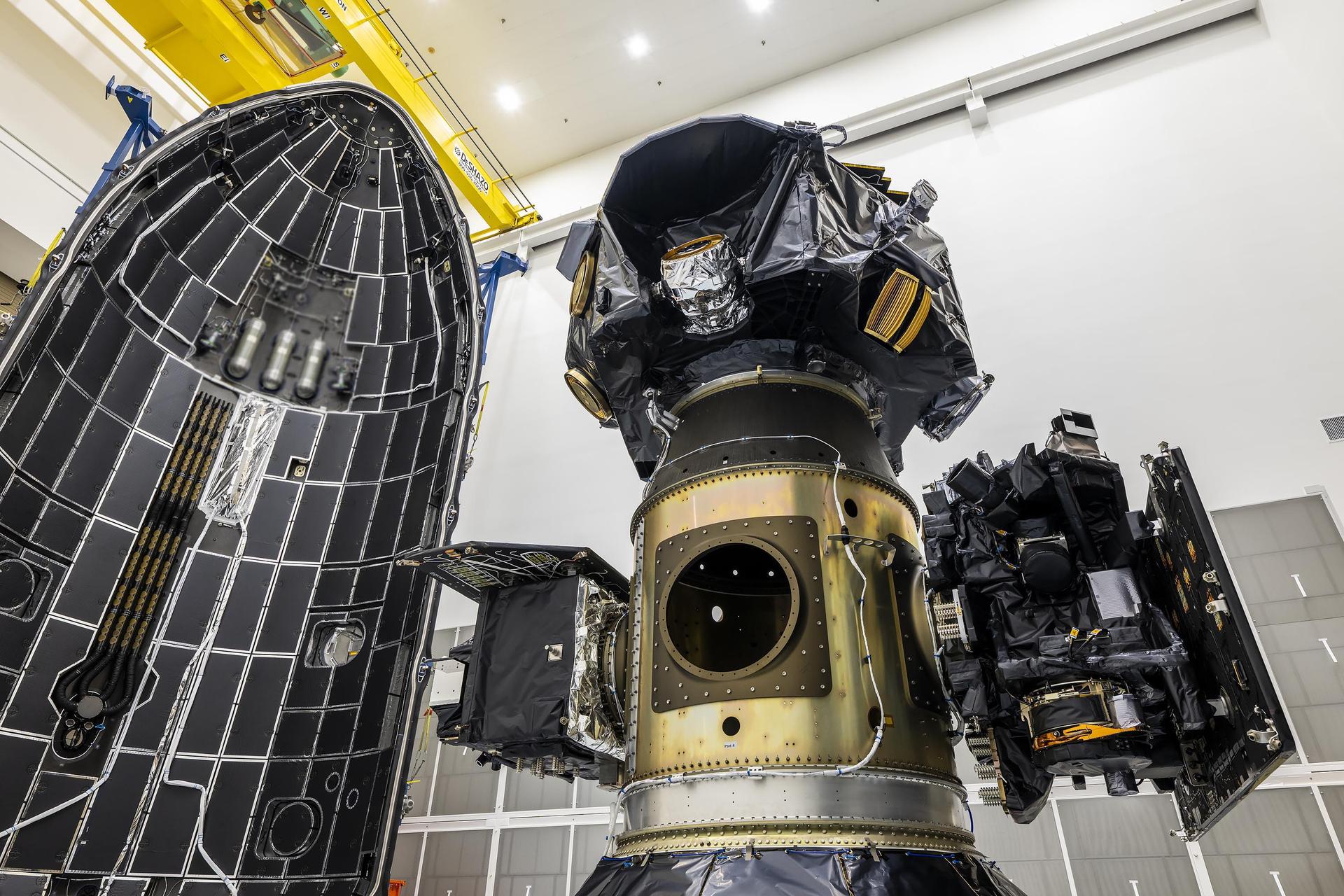
NASA launched a new satellite to help scientists better understand and forecast space weather last fall; not only is the satellite in the proper orbit and sending data back to Earth, but now you can access the data too.
On September 24, 2025, atop a SpaceX rocket, NASA launched their Interstellar Mapping and Acceleration Probe, known as IMAP for short. IMAP is a heliophysics mission that will simultaneously investigate two important and coupled science topics in the heliosphere: the acceleration of energetic particles and interaction of the solar wind with the local interstellar medium.
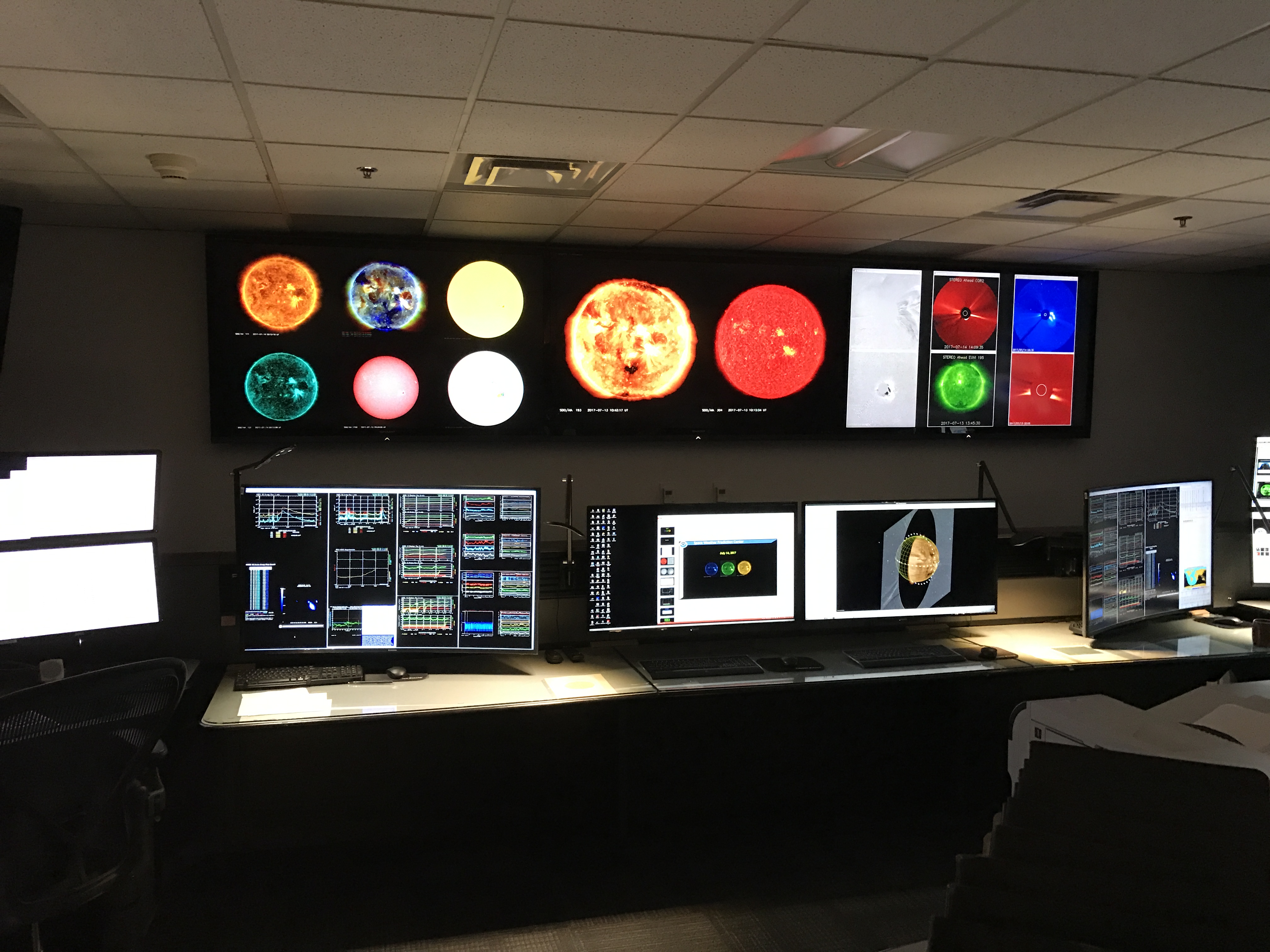
IMAP will be a Sun-tracking spin-stabilized satellite in orbit about the Sun–Earth L1 Lagrange point with a science payload of ten instruments. The L1 Lagrange point is an orbital path in space about one million miles from Earth towards the Sun that is without any magnetic interference from the planets.
IMAP will also continuously broadcast real-time in-situ data that can be used for space weather prediction. It is the fifth mission selected in the Solar Terrestrial Probes program.
In addition to new heliophysics science observations, five in-situ instruments on IMAP make measurements that are critical for advancing space weather research and operational forecasting. These measurements are continuously telemetered in near real-time as part of the low-latency IMAP Active Link for Real-Time (I-ALiRT) space weather data stream. The I-ALiRT data set includes ACE-heritage products at higher measurement cadences and also new data products that are available for the first time as part of the near real-time space weather data pipeline. These new products include high-energy electron count rates, helium ion count rates, solar wind charge state ratios and elemental abundances, and counterstreaming electron flow information.
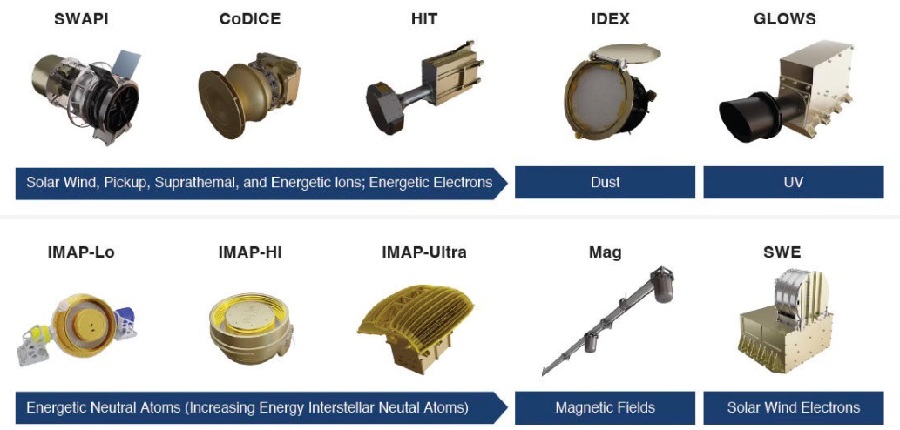
Located at the Laboratory for Atmospheric and Space Physics (LASP) at the University of Colorado, Boulder, the IMAP SDC is responsible for science data processing and distribution of science data to the IMAP instrument teams (ITs) and the scientific community.
“NOAA/Space Weather Prediction Center forecasters look forward to having access to the I-ALiRT data sets from IMAP to improve timeliness of energetic particle event warnings, alerts, and forecasts,” said NOAA’s Space Weather Prediction Center (SWPC) about the data feeds.
And beyond scientists at the SWPC, everyday people can also view the data for themselves. The IMAP Science Data Center is live at https://imap-mission.com/data.
