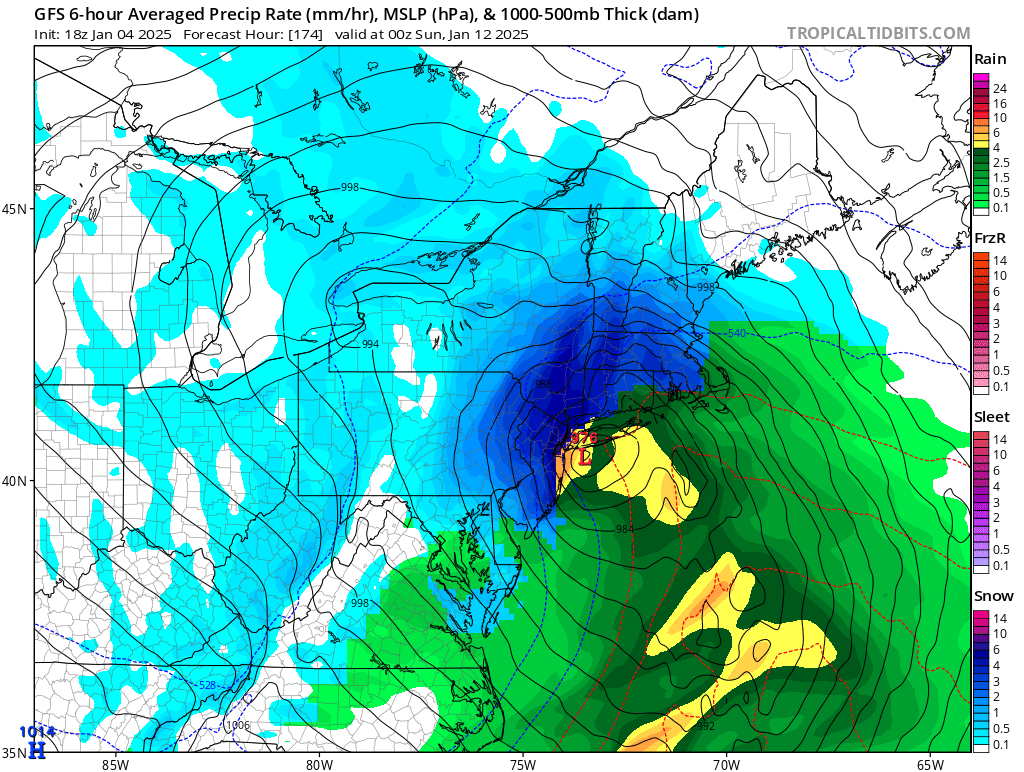
NOAA has selected Tomorrow.io to provide contracting support for the Earth Prediction Innovation Center (EPIC), the backbone of NOAA’s operational weather forecast modeling suite. This contract advances NOAA’s historic effort to accelerate the development of NOAA’s next-generation Earth modeling system, the Unified Forecast System (UFS), through open science.
“With EPIC, we have a once-in-a-generation opportunity to cement U.S. leadership in weather prediction by leveraging the full power of the public, private, and academic sectors,” said NOAA Administrator Neil Jacobs, Ph.D. “We will accelerate the transition of scientific research into operations through a unified approach to model development in a cloud-based environment, which will advance our mission of protecting life and property.”
Established in 2019, the EPIC program provides community modeling infrastructure and engagement opportunities to foster collaboration with the larger weather research enterprise – including academia, public agencies, and private industry. The program aims to more efficiently transition research innovations into operational forecast models used by NOAA’s National Weather Service.
While the EPIC program is in charge of tasks related to management and planning, scientific innovation, and other relevant projects, this contracting partner is responsible for software infrastructure and engineering, as well as user support services. The company will share responsibility for engaging the UFS community and collaborating on high-performance computing initiatives.
The goal of the UFS is to modernize and streamline NOAA’s operational modeling suite while accelerating the transition of scientific research into operations through a unified, community-driven Earth modeling system. By providing a single, flexible framework that integrates various components — such as the atmosphere, ocean and land — the UFS replaces numerous standalone operational models to better predict weather and climate across all timescales.
“This partnership with Tomorrow.io is another key step in EPIC’s goal of advancing the UFS toward a fully coupled Earth System Model,” said Ken Graham, director, NOAA’s National Weather Service. “This is a major component of the Weather Service’s transformation effort, which will help ensure America is ready, responsive, and resilient to extreme weather and water events.”
With this new contract, Tomorrow.io will provide critical modeling infrastructure and community engagement support as NOAA integrates the Model for Prediction Across Scales (MPAS), the computational heart of NOAA’s next-generation weather modeling system, into the UFS. Once incorporated with the UFS, MPAS will serve as the main engine for predicting atmospheric movements—everything from local thunderstorms and tornadoes to tropical hurricanes, jet streams, and major global weather patterns.
“We are proud to lead the team supporting EPIC and NOAA, the trusted global authority in weather science, in strengthening the nation’s forecasting models and infrastructure,” said Thomas Cavett, vice president, U.S. Federal Business, for Tomorrow.iooffsite link. “Our expertise in AI modeling and satellite observations reflects our commitment to NOAA’s mission of protecting lives and property. We look forward to helping realize NOAA’s vision and supporting continued progress in forecasting and early warning for partner nations around the world.”
