
A weak morning earthquake rattled portions of western North Carolina today, the latest in a string of relatively weak earthquakes to hit the eastern United States in recent weeks. According to USGS, at 1:06 am this morning, a weak magnitude 1.6 earthquake struck from a shallow depth of 1.9 km near the town of Newland. Newland is located north of Asheville and is due east of Knoxville, Tennessee.
According to USGS, earthquakes with a magnitude of 2.0 or less are rarely felt or heard by people, but once they exceed 2.0 , more and more people can feel them. While damage is possible with magnitude 3.0 events or greater, significant damage and casualties usually don’t occur until the magnitude of a seismic event rises to a 5.5 or greater rated event.
This earthquake joins several other relatively weak earthquakes to strike the eastern U.S. in recent weeks. Today’s earthquake in North Carolina joins joining other recent earthquakes in the east in New Hampshire, Georgia, Kentucky, Louisiana, Arkansas, Alabama, and Maine.
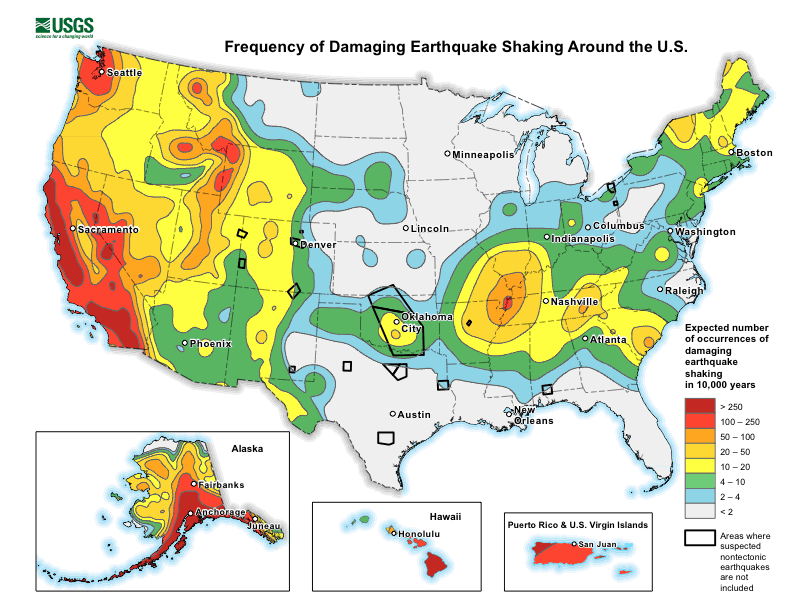
According to the North Carolina Department of Environmental Quality, while North Carolina is no stranger to earthquakes, large, damaging earthquakes are rare. Large, damaging seismic events are rare and the few felt in North Carolina had epicenters outside of the state. Most quakes in North Carolina originate from the East Tennessee seismic zone to the west, the Charleston, South Carolina seismic zone to the south, or the Central Virginia seismic zone to the north. The most common and strongest earthquakes to strike the state have been in the western part along the Appalachian Mountains.
The North Carolina Department of Environmental Quality (DEQ) cautions that people in the state should be prepared for the possibility of larger quakes. “Although strong earthquakes here in North Carolina are infrequent, proper construction techniques need to be followed. An earthquake of magnitude 5 or greater could block major transportation routes in the mountains and cause structural damage elsewhere,” the DEQ writes. They add, “Many of the larger earthquakes in North Carolina occurred when the state was more rural. Recent development includes buildings and infrastructure such as road and power networks. Modern building codes take into account the possibility of an earthquake but many older buildings were not constructed to withstand violent shaking.”
