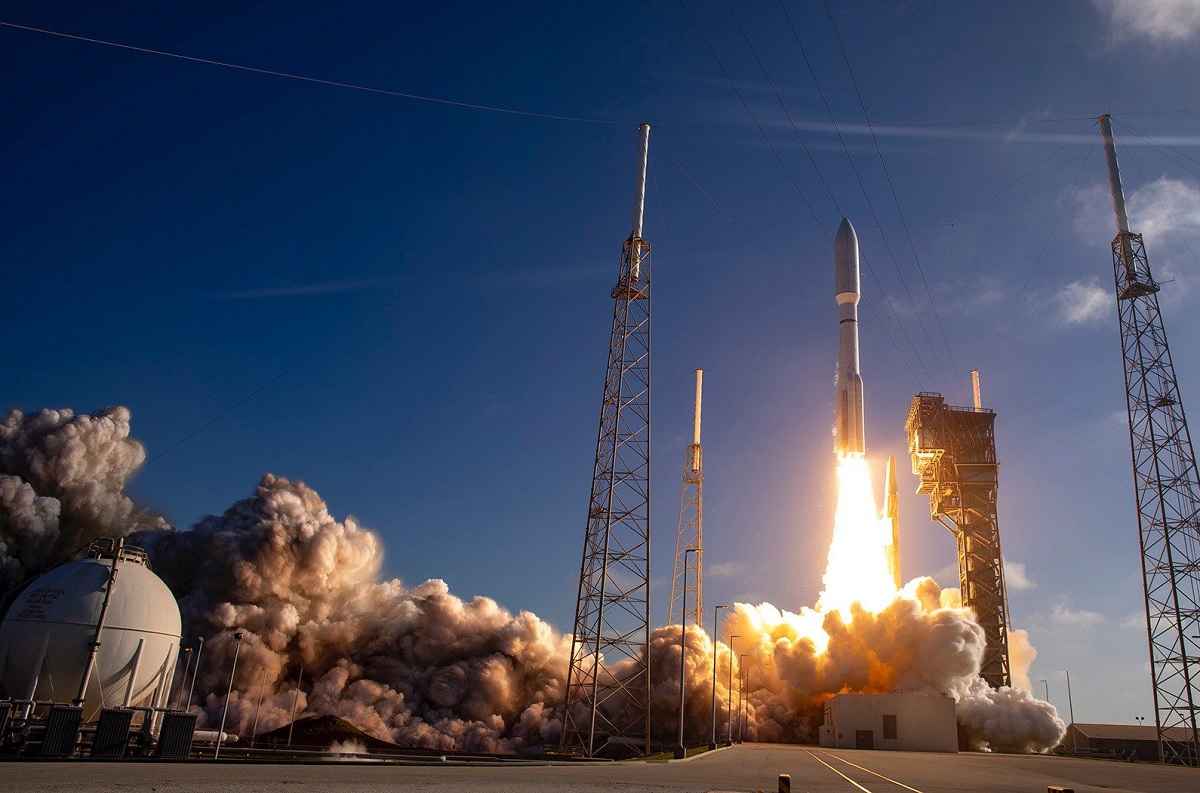
A United Launch Alliance (ULA) Atlas V rocket lifts NOAA’s newest weather satellite into space on March 1. Image: ULA
The advanced new GOES-T weather satellite, which was launched from Florida’s space coast on March 1, has reached its geostationary orbit high above the Earth; as a result, NOAA has officially renamed the weather satellite to “GOES-18.” The satellite enjoyed its final engine burn earlier today, reaching orbit at 22,236 miles above the Earth. By being so high, the satellite can be nearly fixed above one location, capturing detailed imagery and data for meteorologists on Earth.
“We at NASA are proud to support our joint agency partner, NOAA, and their mission to provide critical data and imagery to forecasters and researchers tracking hazardous weather,” said NASA Deputy Administrator Pam Melroy after the launch. “While the GOES-R series satellites’ main job is to help with weather prediction, these satellites produce observations that also help with NASA science. Our agencies’ collaboration brings great benefits toward understanding our planet.”
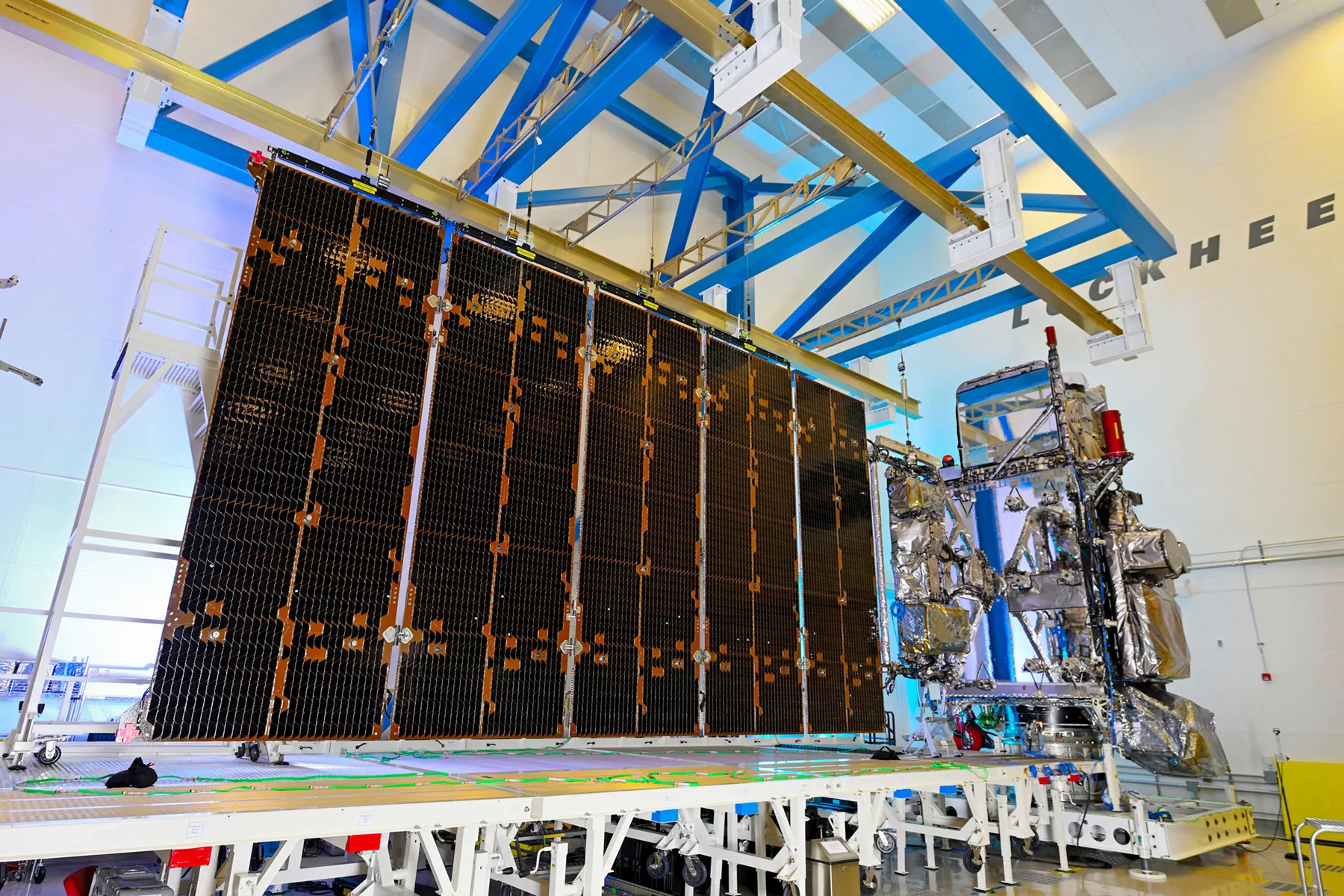
While the satellite is in geostationary orbit, it still has many things to do before it becomes operational by meteorologists on Earth. Now known as GOES-18, the satellite will perform its second stage solar array deployment, releasing the solar array. The deployed solar panels will form a single solar array wing that will rotate once per day to continuously point its photovoltaic (solar) cells toward the sun. The photovoltaic cells will convert energy from the sun into electricity to power the entire satellite, including the instruments, computers, data processors, sensors, and telecommunications equipment. With the satellite fully powered, several maneuvers will be conducted to send GOES-18 to its 89.5 degrees west longitude initial checkout position, between the operational GOES-East and GOES-West satellites. Once in position, the magnetometer boom will be deployed and the satellite will then begin on-orbit checkout and validation of its instruments and systems.
By May, the first images captured by GOES-18 will be sent to Earth. After a successful testing routine, GOES-18 will take over as the operational GOES-West satellite by early 2023, replacing GOES-17. NOAA plans to continue to maintain GOES-17 as a back-up should anything happen to this new GOES-West or the older GOES-East weather satellite, both of which provide continuous weather satellite coverage over the United States and adjacent oceanic waters.
