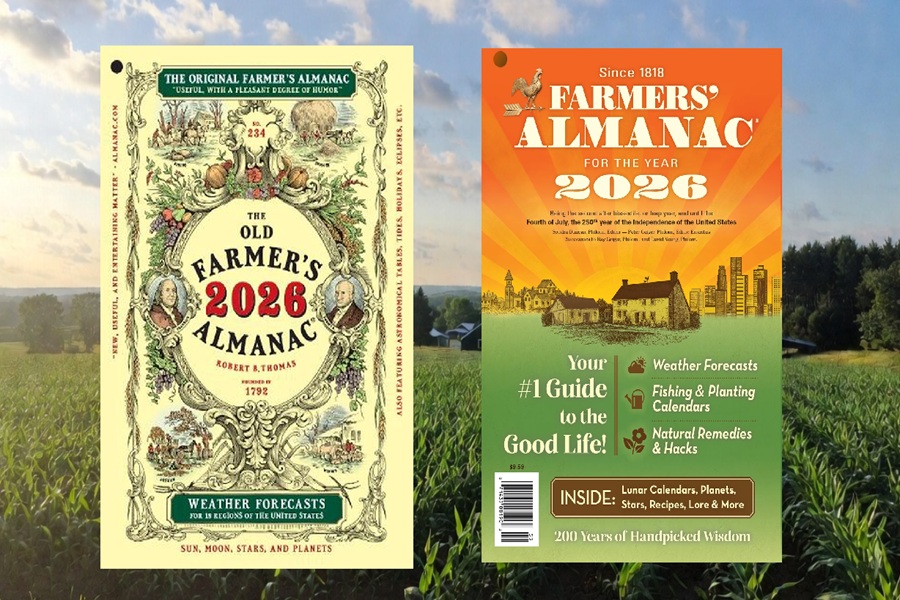
After publishing seasonal weather outlooks, household hints, lunar calendars, and gardening guides for over 200 years, the Farmer’s Almanac is calling it quits.
“It is with a heavy heart that we share the end of what has not only been an annual tradition in millions of homes and hearths for hundreds of years, but also a way of life, an inspiration for many who realize the wisdom of generations past is the key to the generations of the future,” states Editor Sandi Duncan.
According to a press release issued by the Farmer’s Almanac, “This decision, though difficult, reflects the growing financial challenges of producing and distributing the Almanac in today’s chaotic media environment.”
“We are incredibly proud of the legacy we leave behind and grateful to our loyal staff, readers, contributors, and partners who have supported us through the years,” Duncan added. “Though the Almanac will no longer be available in print or online, its spirit will live on in the values it championed: simplicity, sustainability, and connection to nature.”
While this is the end of the road for the Farmer’s Almanac which started publishing in 1818, the same isn’t true for the Old Farmer’s Almanac which started publishing decades earlier in 1792.
Catherine Boeckmann, Executive Digital Editor and Master Gardener for the original almanac wrote, “Over the years, there has been some confusion between different almanacs, so to be clear: The OLD Farmer’s Almanac isn’t going anywhere. As we have since 1792, during George Washington’s presidency, we will continue to publish our annual edition, while educating and entertaining readers online at Almanac.com.”
Both have published seasonal outlooks and daily or weekly weather forecasts, but neither have a exceptional track record in accuracy. While The Old Farmer’s Almanac claims an accuracy of 80%, a 1981 study published in Weatherwise showed the accuracy was closer to 52% –roughly the same as a flip of the coin.
