NOAA has revisited their prediction for the Atlantic hurricane season, saying a relatively quiet below-normal season is still expected. However, they still caution residents to prepare anyway because a below-normal season can still produce one or more catastrophic storms.
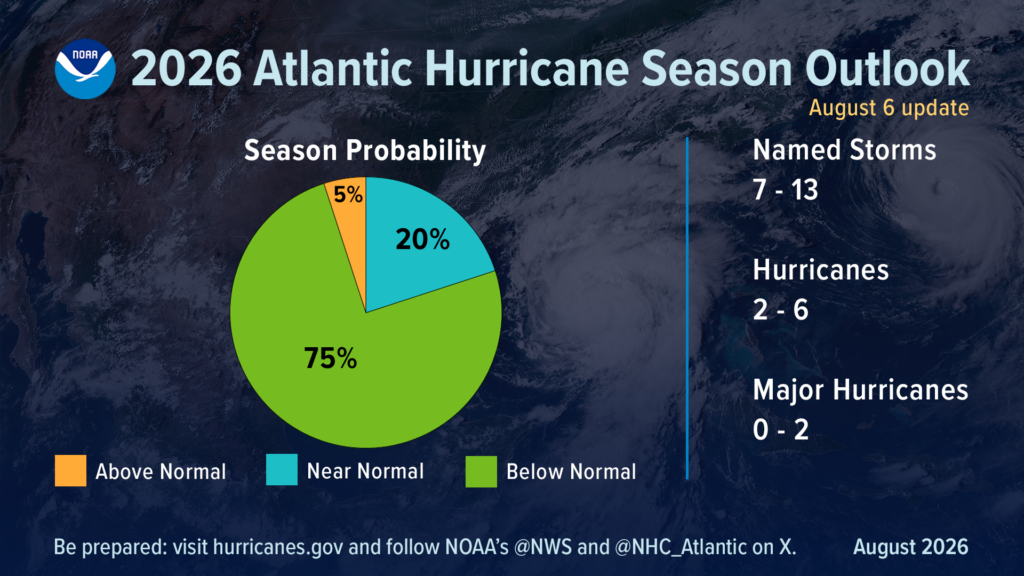
Forecasters from NOAA’s National Weather Service updated the number of expected named storms to 7-13 , of which 2-6 could become hurricanes, including 0-2 major hurricanes which are hurricanes with winds of 111 mph or greater. In a typical season in the Atlantic, hurricane season will yield 14 named storms, of which seven become hurricanes, including three major hurricanes. The updated ranges from NOAA today cover the entire season from June 1 through November 30 and are inclusive of the two tropical storms that have already formed, Arthur and Bertha. Overall, NOAA forecasters predict a 75% chance for below-normal activity, with a 20% chance of a near-normal season, and just a 5% chance of above-normal activity. This updated prediction is similar to the initial outlook issued in May.
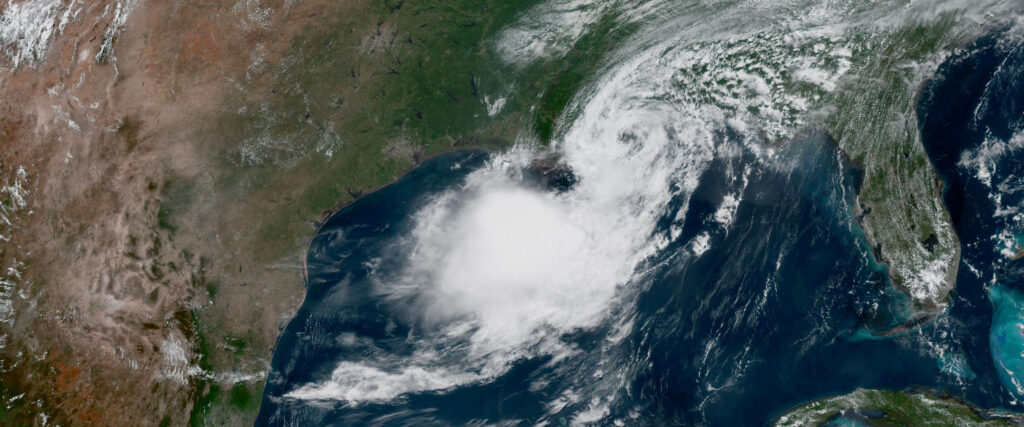
Arthur and Bertha both impacted the Gulf of America Coast earlier this season, with Arthur bringing significant flooding rains to southeastern Texas.
“Inland rainfall is a major cause of damage from tropical storms and hurricanes, as Arthur demonstrated,” said NOAA’s National Weather Service Director Ken Graham. “That’s why it’s important to prepare for every storm that’s projected to impact your area, even if it never reaches hurricane strength.”
For the remainder of the season, tropical storm activity in the Atlantic basin is expected to be tempered by El Nino conditions, which first emerged in the equatorial Pacific in June. El Nino increases wind shear, which tends to prevent tropical storms from forming or from getting stronger once formed. Other less influential factors include temperatures near average in the Atlantic Ocean and a neutral west African monsoon. Dust blowing off the Sahara across the Atlantic is also making tropical cyclone development difficult in the Atlantic, although that is expected to lessen as the season continues.
“When El Nino emerges, it usually becomes the dominant factor in total hurricane season activity, and this El Nino continues to get stronger every month,” said Matt Rosencrans, lead hurricane season forecaster with NOAA’s National Weather Service.“Compared to a mature El Nino, other mechanisms play a smaller role in determining the number and intensity of tropical storms in the Atlantic basin.”
Although El Nino tends to limit tropical activity in the Atlantic, it can enhance storm development in the Pacific. NOAA’s outlook for the Eastern Pacific hurricane season remains unchanged with 15-22 named storms, which is above average. So far there have been seven named storms, of which two became hurricanes, including one major hurricane. An above-normal season is also expected in the Central Pacific basin, with 5-13 named storms and tropical depressions.
