An afternoon earthquake has jolted Las Vegas and surrounding communities today. According to USGS, a magnitude 3.8 earthquake struck just west of downtown Las Vegas near Summerlin South at 1:47 pm; USGS originally rated the earthquake as a magnitude 4.1 event but lowered it after analyzing additional data. The earthquake’s epicenter had a depth of 7 km.

More than 2,500 people used the “Did you feel it?” reporting tool on the USGS website to report they felt today’s earthquake.
According to USGS, earthquakes with a magnitude of 2.0 or less are rarely felt or heard by people, but once they exceed 2.0 , more and more people can feel them. While damage is possible with magnitude 3.0 events or greater, significant damage and casualties usually don’t occur until the magnitude of a seismic event rises to a 5.5 or greater rated event.

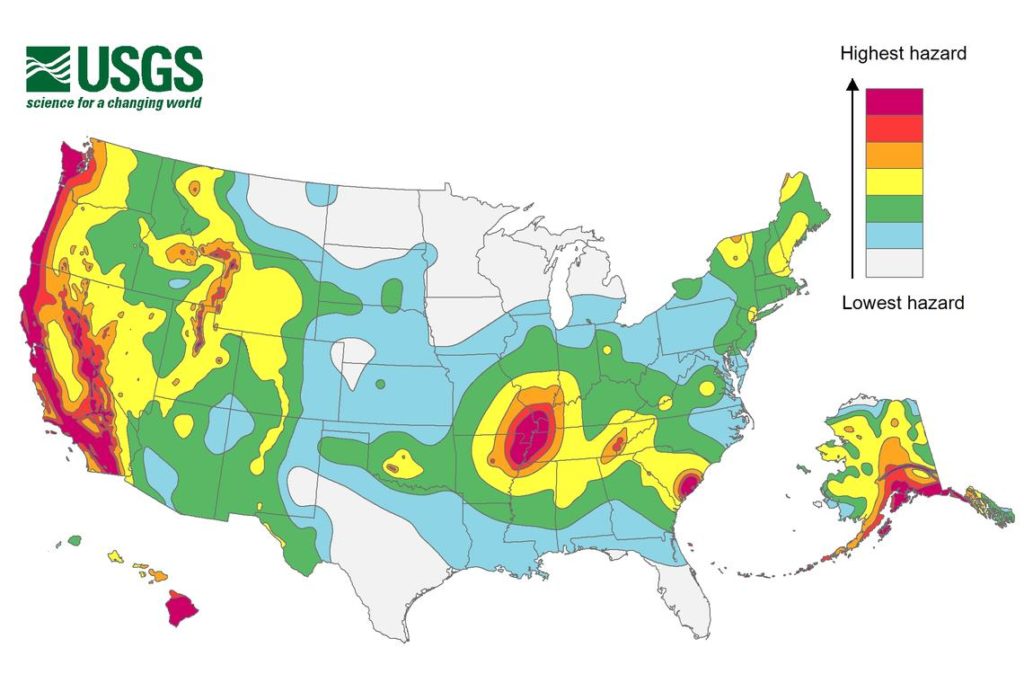
Nevada is the third most seismically active state in the continental United States, behind only California and Alaska. The City of Las Vegas wrote on it’s website, “Nevada and Las Vegas are situated on a network of fault lines, and earthquakes happen in the state all the time. Most are too small to feel, but that doesn’t mean a “big one” can’t happen. Whether it be tomorrow or a century from now, the threat of a significant seismic event is very real.”
“The vast majority of Nevadans are not aware of the earthquake threat in Nevada, do not take earthquake safety to heart, and do not know how to react to and mitigate to minimize earthquake losses,” says the Department of Public Safety in the Nevada Division of Emergency Management. They add, “This has affected our state of earthquake preparedness and limited the amount of resources the state invests in earthquake threat characterization, preparedness, and response.”
USGS says aftershocks from today’s earthquake are possible. The USGS forecast placed the probability of a larger quake striking the area within the next 24 hours at about 4%. The chance of an aftershock of magnitude 3.0 or greater was estimated at 26%, while the likelihood of a 4.0 or stronger event was put at 5%. A magnitude 5.0 or greater aftershock was considered less than 1% likely.