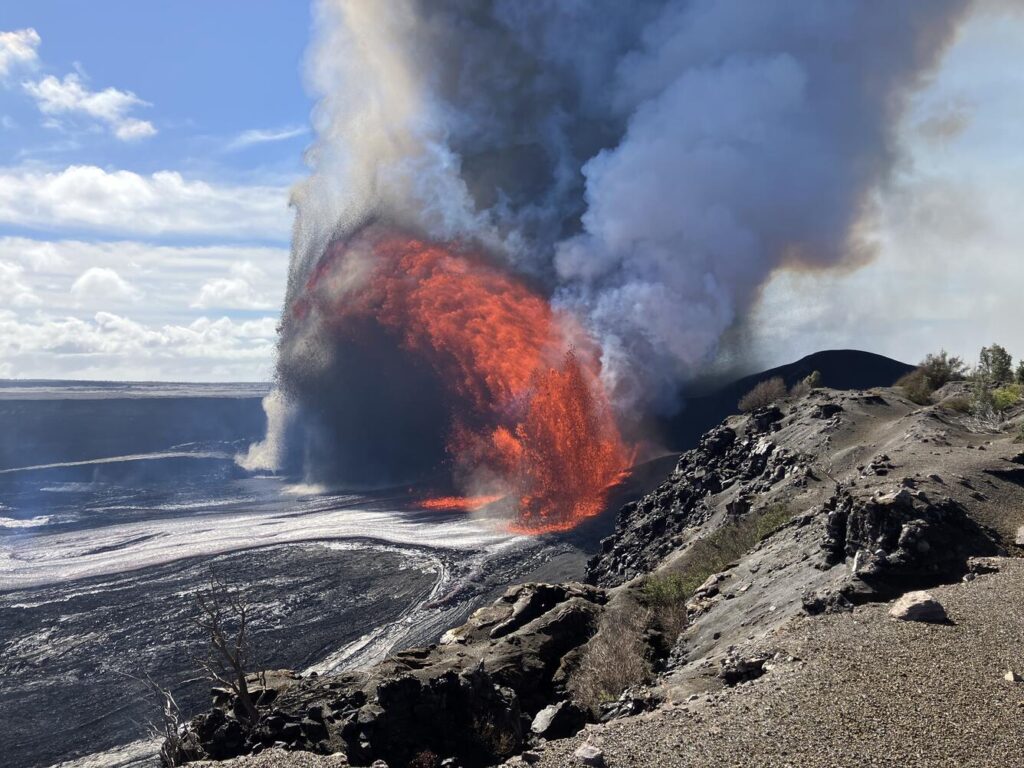
The site of the most active volcano in the world became a place of tragedy with park officials confirming someone died from injuries sustained there on February 27. In a release issued today, March 3, Hawaii Volcanoes National Park said a 33 year old man encountered fatal injuries at Kilauea Volcano on Hawaii’s Big Island.
“National Park Service personnel responded to an incident on February 26 in a closed area on the east side of Kilauea caldera within Hawaii Volcanoes National Park,” said the National Park Service, adding that the volcano was not actively erupting at the time.
“Search and rescue personnel conducted operations overnight in steep and hazardous terrain. On February 27, responders located the individual and airlifted him from the area. He was transported to Hilo Benioff Medical Center where he was pronounced deceased,” the Park Service said.
The person was a 33-year old Hawaii resident; the park notified the family and is withholding the name due to privacy considerations.
“Kilauea caldera contains hazardous terrain, including unstable cliff edges and volcanic features,” said the Park Service, adding that visitors are reminded to stay in designated open areas and comply with all closures.”
Kilauea has been erupting episodically since December 23, 2024, primarily from two vents inside its caldera. Eruptive episodes, which generally last for less than 12 hours, are separated by pauses that can be as long as over two weeks. The last eruption episode, Episode 42, ended February 15 at 11:38 pm local time. USGS scientists believe the 43rd event will happen sometime between March 10-16.
Each eruption episode brings out large volume of visitors to view the lava ejecting into the air. During eruptions, due to a variety of volcanic hazards, the most unsafe parts of the park are closed to visitor access. But as this tragedy shows, hazards remain across the terrain even when the volcano isn’t actively spewing lava.
Kilauea is widely considered one of the world’s most active volcanoes, often cited as the most active due to its near-constant, decades-long eruptions and frequent lava flows. Located on Hawaii’s Big Island, it has been erupting almost continuously since 1983, with new regular eruptive episodes occurring into 2026.
