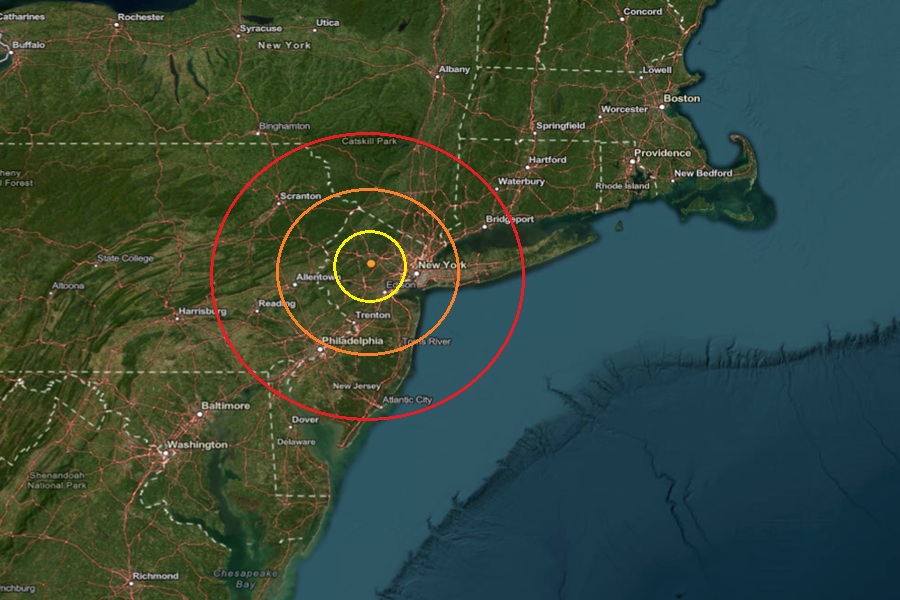
An earthquake struck New Jersey west of New York City this morning. According to USGS, at 5:38 am today from a depth of 10.0 km, a weak magnitude 1.6 earthquake struck near Randolph, New Jersey, which is roughly 25 miles west of New York City. Specifically, the epicenter was located between Wilrich Glen Road and Schoolhouse Lane northwest of I-287.
According to USGS, earthquakes with a magnitude of 2.0 or less are rarely felt or heard by people, but once they exceed 2.0 , more and more people can feel them. While damage is possible with magnitude 3.0 events or greater, significant damage and casualties usually don’t occur until the magnitude of a seismic event rises to a 5.5 or greater rated event.
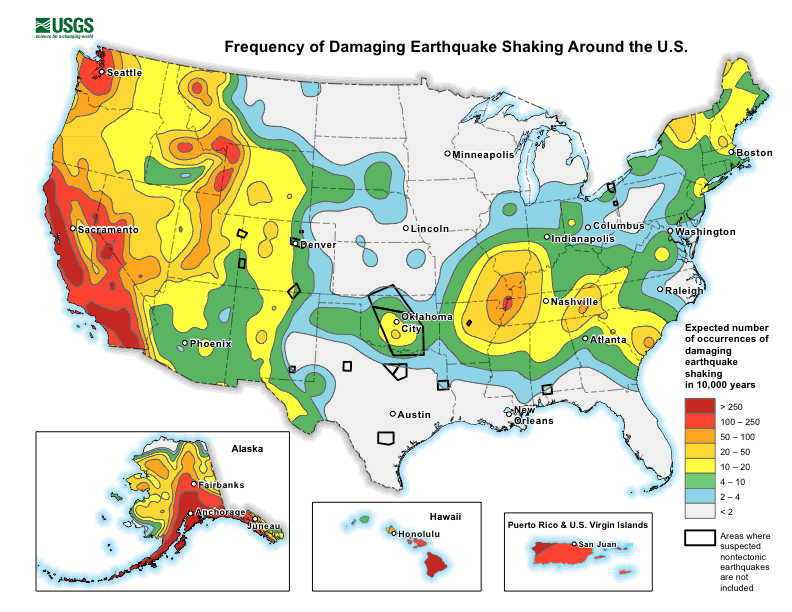
USGS says this was the first earthquake to strike New Jersey or an area within 250 km of today’s epicenter over the last 3 weeks.
Today’s earthquake is located east of an area that has seen an uptick in seismic activity following a 2024 earthquake. It appears unlikely that today’s earthquake is related to that other earthquake hotspot.
The earthquake sequence at that unrelated hotspot began with a 4.8 magnitude event on Friday, April 5, 2024 and produced dozens of noticeable earthquakes in just the first week. There were a total of 53 earthquakes measured from April 5 through to April 12 with hundreds since.
Beyond the magnitude 4.8 earthquake, there were moderate aftershocks too. According to USGS, 3.7 magnitude event struck near Bedminster just before 6 pm on April 5, with 10 other earthquakes measuring as a 2.0 or greater magnitude event.
Beyond rattling nerves, the earthquake also damaged the contents of homes and businesses. In Berkeley Heights, Union County, New Jersey, the Berkeley Heights Fire Department reported that the foundation of a home there failed and that the primary earthquake on April 5 was a contributing factor. A Brooklyn middle school gym was deemed unsafe after a Department of Buildings inspection found cracks inside; the rest of the school at 370 Fountain Avenue was determined to be safe. Dozens of gas and water leaks were reported in the region, leaving people without utilities like power or water
While the East Coast does not sit on a major tectonic plate boundary, the region is broken up by older, internal fault lines that occasionally shift, creating earthquakes in the process.
The Ramapo Fault line is one such active fault line that runs through Pennsylvania, New Jersey, and New York; it routinely produces relatively weak earthquakes frequently in the region.
