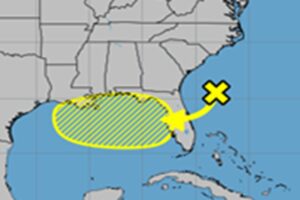
There could be a new tropical cyclone in the Gulf of America by the end of the week. The latest Tropical Outlook from the National Hurricane Center (NHC) in Miami suggests so, as do various computer forecast models that meteorologists use to aid in their weather forecasting.
A trough of low pressure located offshore the Atlantic coast of northern Florida is producing disorganized showers and thunderstorms across portions of the southeastern United States, northwestern Bahamas and adjacent Atlantic waters. Unlike Chantal which moved into the Carolinas from the same genesis area, this new system is forecast to move west across Florida during the next day or so, and into the northeastern Gulf by late Tuesday. According to the NHC, environmental conditions could support some gradual development of this system during the middle to latter part of this week while it moves westward over the northeastern and north-central portions of the Gulf.
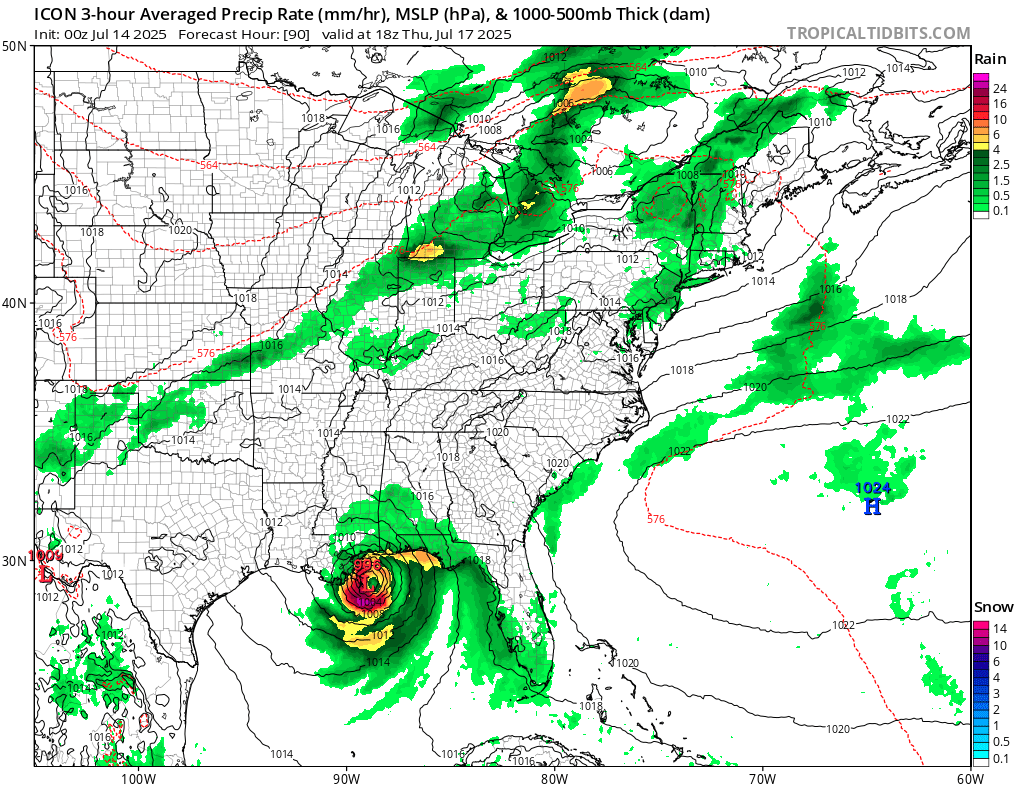
Computer forecast models, such as the GFS and ECMWF do show a concentrated area of shower and storm activity moving west along the northeastern Gulf of America coast this week. Other models, such as the ICON, provide a much more robust solution with a significant tropical cyclone impacting the central Gulf coast by the end of the week. While the models share a lot of the same initial data, they differ with how they digest that data and compute possible outcomes. One is better than the other in some scenarios, while the opposite is true in others. No model is “right” all the time. Beyond the ECMWF and GFS models, and others like the ICON, there are numerous other models from other countries, other academic institutions, and private industry that are also considered when making a forecast.

Regardless of development suggested by these models, heavy rainfall could produce localized flash flooding over portions of Florida and the north-central Gulf coast through the middle to latter portion of this week. How much falls and where it falls will remain unknown until more of the system takes shape over the next day or two. If formation does occur, it will be slow too; the NHC says there’s only a 20% chance of cyclone formation here over the next 7 days.
The Atlantic Hurricane Season began on June 1 and runs through to the end of November. Forecasters continue to call for an above normal season in terms of activity.
