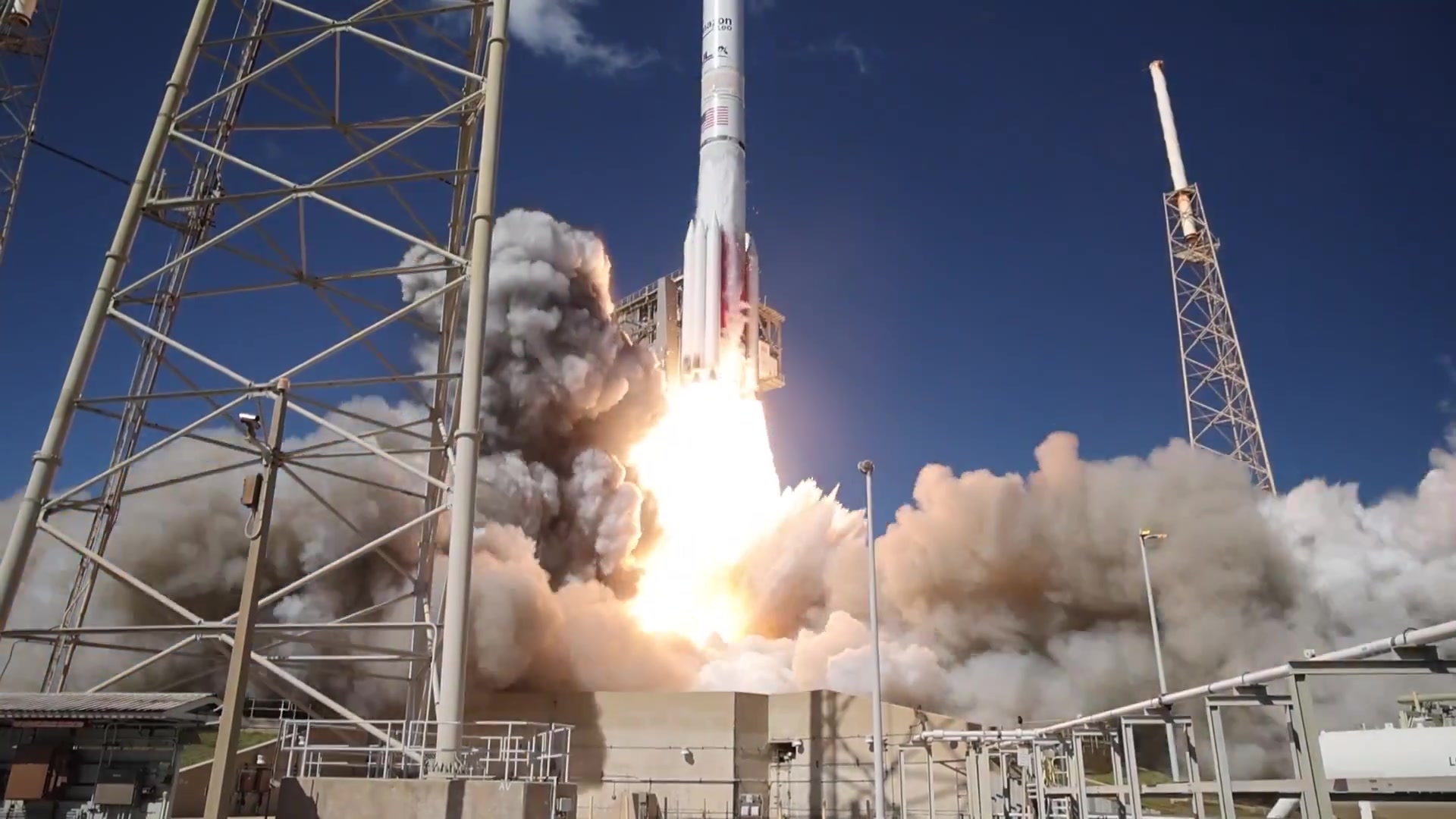
A United Launch Alliance Vulcan rocket failed about 10 minutes into flight Sunday, and its 40 Amazon Leo broadband satellites never reached orbit. The company said the satellites were lost on what was supposed to be the rocket’s comeback flight.
The rocket lifted off from Space Launch Complex 41 at 12:40 p.m. EST, at the very end of its 29-minute launch window. ULA posted at 12:40 p.m. that the vehicle had “cleared the tower.” About two minutes later, ULA said burnout and jettison of the GEM 63XL solid rocket boosters were confirmed and that Vulcan “continues to accelerate on the thrust from its BE-4 main engines.”
At 1:30 p.m. EST, 50 minutes after liftoff, ULA confirmed the failure on X.
“Based on data received by our Launch Director, we confirm that the Vulcan vehicle launched from Space Launch Complex 41 suffered an anomaly 10 minutes into the flight and failed to deliver the Amazon mission to orbit,” the company said.
“Every flight generates data, and every flight teaches us something. Since the anomaly just occurred, we don’t have any specific data yet to understand what occurred today,” the statement said.
ULA said it holds itself “to the standard of mission success. Today, we did not meet that standard.”
The company said it “will work closely with our customer and other appropriate organizations to find the cause, determine the appropriate corrective action, and return to flight as quickly as possible.”
Amazon Leo responded on X at 2:11 p.m. EST.
“There is risk with any launch, and that’s especially true for inaugural missions like LV-01,” the Amazon Leo account posted. “ULA has been a trusted partner for Amazon, and we believe they’ll learn from this mission and deliver on their long-term plans for Vulcan.”
As of Sunday afternoon, no public statement from the Federal Aviation Administration or the U.S. Space Force about the failure could be found. The FAA had posted an operations advisory for the launch, designated ULA KV-01, with a primary window Sunday afternoon.

Where the Failure Happened in the Flight
ULA hasn’t said which part of the rocket failed. But the company’s published flight plan shows what was supposed to be happening at the 10-minute mark.
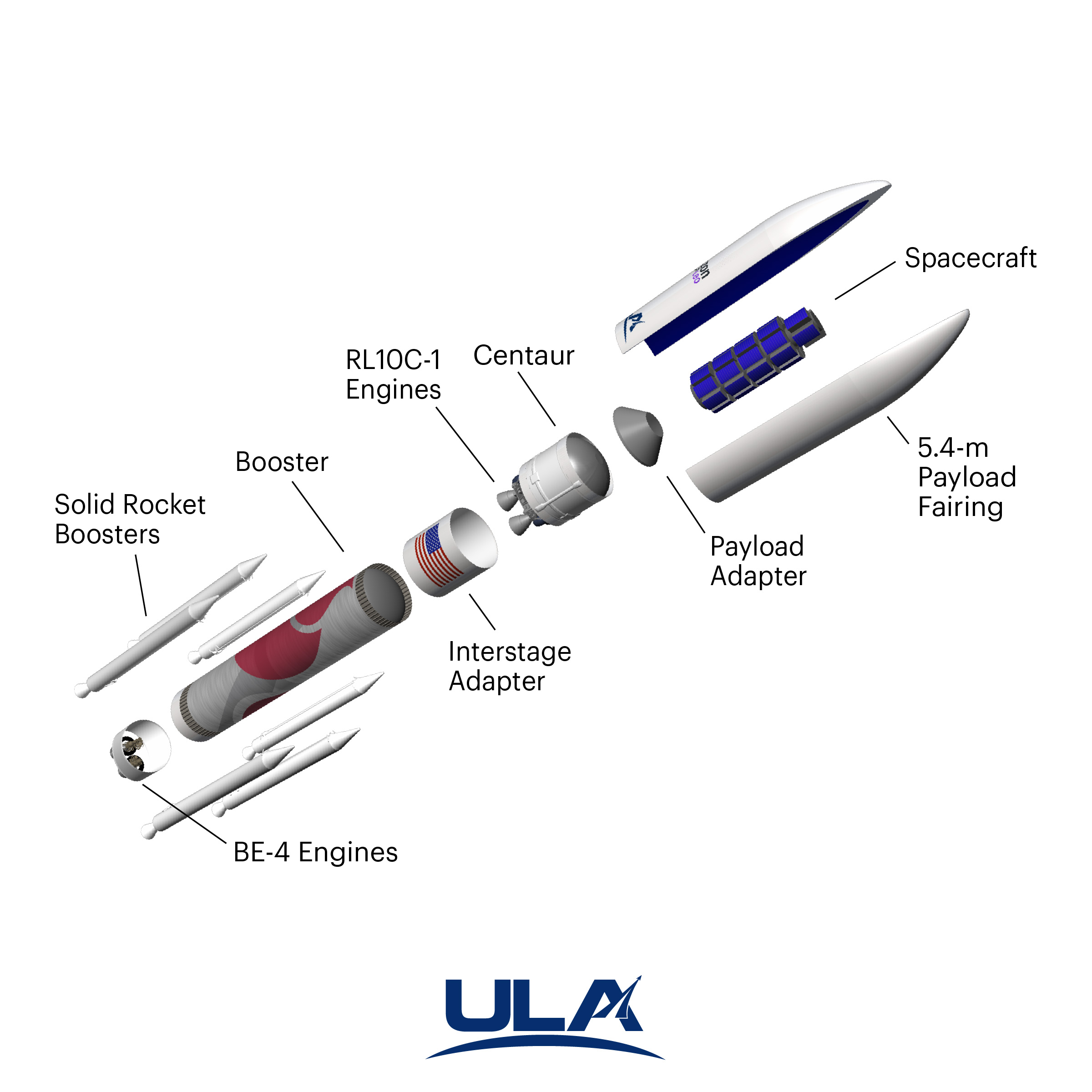
According to the ULA mission description, the Vulcan’s first stage was to burn for about five minutes before shutting down. It would separate east of Charleston, South Carolina. The Centaur V upper stage’s two RL10C-1-1A engines would then ignite, and the 70-foot payload fairing would be jettisoned shortly afterward. The first Centaur burn was planned to last nearly 12 minutes to reach a preliminary parking orbit.
Under that timeline, the Centaur’s first burn would have been underway when ULA says the anomaly occurred. ULA hasn’t confirmed what failed or when the satellites were lost.
Had the flight gone to plan, the 40 satellites would have been released about 285 miles up, starting 70 minutes after liftoff, ULA said.
A Troubled Return to Flight
Sunday’s launch was supposed to show that ULA’s newest rocket was ready to fly regularly again.
Vulcan, which debuted in January 2024, had flown four times before Sunday. On two of those flights, in October 2024 and on Feb. 12 this year, the nozzle on one of the Northrop Grumman-built solid rocket boosters failed. Space.com and Spaceflight Now reported that both times the rocket still delivered its payloads to their planned orbits.
After the February flight, a Space Force national security mission called USSF-87, the Space Force paused Vulcan national security launches.
“Until this anomaly is solved, we will not be launching Vulcan missions,” Col. Eric Zarybnisky, the Space Force’s portfolio acquisition executive for assured access to space, said two weeks after the February launch, Spaceflight Now reported.
ULA said investigators from the company, Northrop Grumman, the Space Force and other agencies found “three credible causes.” The team changed the nozzle’s design and the way it is built, the company said.
“As with any new rocket, there are risks associated with every launch,” ULA President and CEO Mark Peller said in a statement released Nov. 10, before the flight.
Peller told Spaceflight Now the Space Force wanted ULA “to get through this first commercial flight” and planned to review the data before deciding whether to resume national security missions.
Space.com reported that the boosters appeared to perform as expected Sunday, and that a different problem ended the mission.
The flight was also the first for Blue Origin’s BE-4 engine since a Blue Origin New Glenn rocket, which also uses BE-4 engines, exploded on its pad during a test in May, Spaceflight Now reported. ULA officials said Blue Origin had installed a retrofit kit on the Vulcan’s engines and had qualified it through hot-fire testing.
Three Tries to Get Off the Ground
The launch had been delayed twice.
On Friday, ULA called off the first attempt after a power interruption at the Air Liquide gaseous nitrogen plant knocked out its high-pressure pumps, the company said. On Saturday, a network communication issue between ground equipment and the rocket would have extended the hold beyond the launch window. ULA said then that “the vehicle and spacecraft remain healthy.”
On Sunday, ULA and Amazon teams “unanimously voted GO” shortly after noon. The count was then stopped and recycled, and Launch Director Eric Richards retargeted liftoff to 12:40:30 p.m. EST, according to ULA updates reported by The Space Coast Wire. ULA hasn’t said why the count was held.
A First for the Rocket and for Amazon
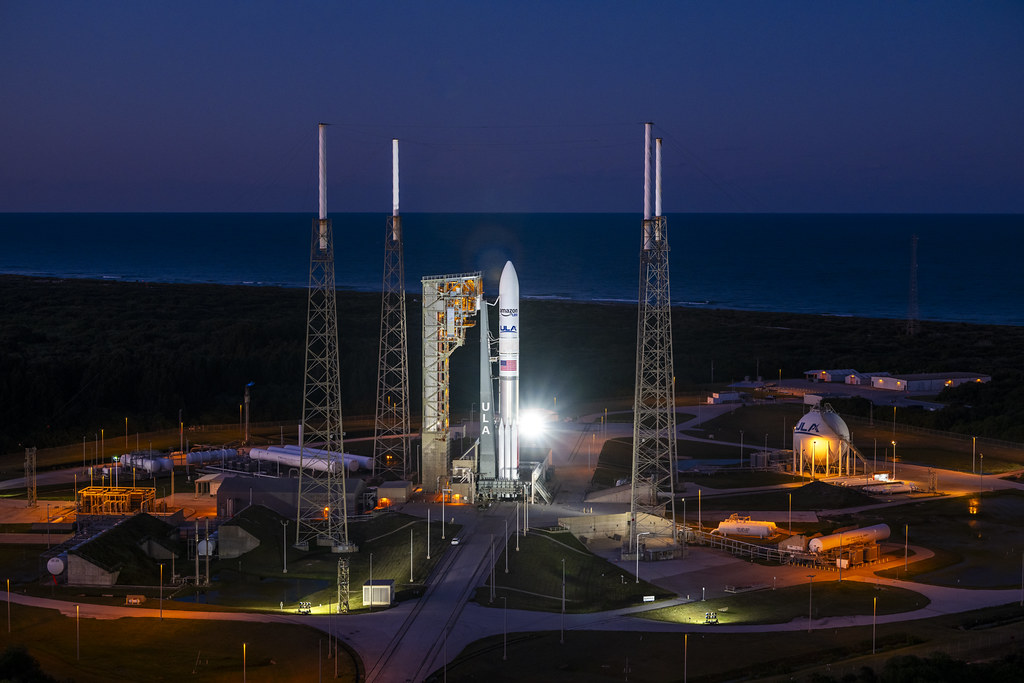
The rocket, designated V-012, flew in what ULA calls its VC6L configuration. It was the first Vulcan to fly with six solid rocket boosters, and the first with a shorter Centaur V upper stage built for low Earth orbit. ULA said the 215-foot rocket weighed about 1.99 million pounds when fueled and produced 3.9 million pounds of thrust at liftoff.
ULA said the payload, more than 50,000 pounds, was a company record and the largest batch of satellites Amazon had put on one launch.
Amazon plans a first-generation constellation of more than 3,200 satellites. Spaceflight Now reported that Amazon had launched nearly 400 satellites on Atlas V, SpaceX Falcon 9 and Arianespace Ariane 6 rockets since April 2025. It hadn’t launched any since July.
SpaceX’s competing Starlink network has more than 11,000 satellites in orbit, according to astronomer Jonathan McDowell, Spaceflight Now reported.
Amazon has been counting on Vulcan to carry much of that load.
“Vulcan will launch close to half our first-generation constellation, making it our primary workhorse over the next several years,” Melissa Wuerl, Amazon Leo’s director of launch systems, said in a statement before the launch, Spaceflight Now reported.
Amazon had said its second Vulcan mission could follow within weeks, and Peller has said he eventually wants Vulcan to launch twice a month. ULA hasn’t said how Sunday’s failure will affect those plans or the Space Force missions that are waiting on the rocket.
ULA said it would provide more updates “when new information becomes available.”
