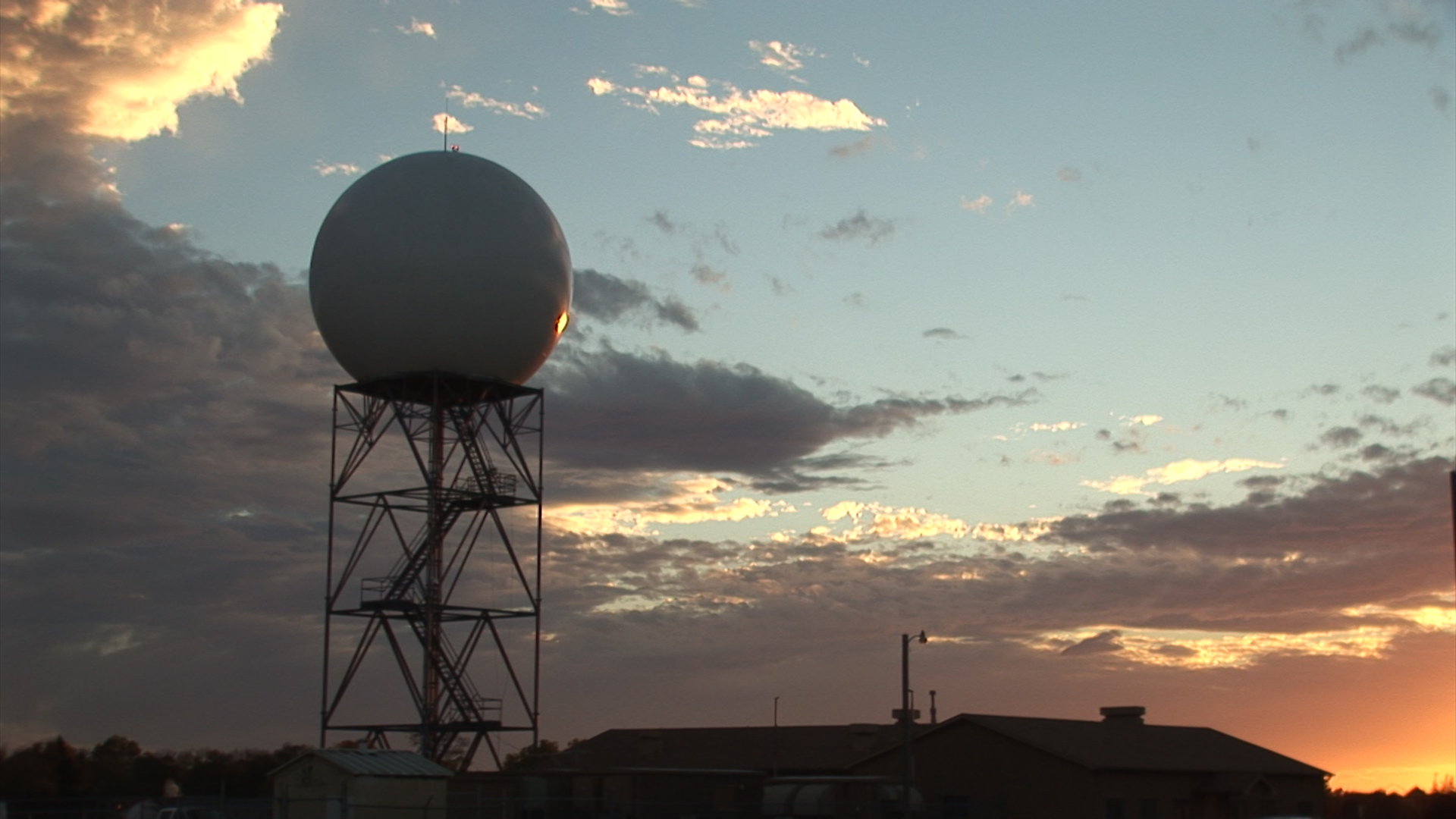
Just in time before a significant severe weather event is expected to impact portions of New Jersey with the threat of damaging winds and tornadic thunderstorms, a key weather RADAR unit has been repaired. The unit was struck by lightning and damaged on Saturday, forcing technicians to repair the system. According to the Mount Holly, New Jersey of the National Weather Service, the RADAR unit responsible for scanning the skies around Philadelphia, New Jersey, and New York City is now back on-line .
RADAR stands for RAdio Detection And Ranging. It is a detection system that uses radio waves to determine the distance, angle, and velocity of objects. Coined by the U.S. Navy in 1940, the term is now an anacronym, written in lowercase as “radar”.
On Saturday, the National Weather Service announced that the “KDIX radar took a direct hit from lightning….and will be down until at least Sunday.” The KDIX radar unit is located at Joint Base McGuire-Dix-Lakehurst in Manchester Township, Ocean County, New Jersey
According to the National Weather Service, technicians made timely repairs. “The KDIX radar has returned to service following a lightning strike on Saturday! Special thanks to our technicians for the timely weekend repair,” wrote the Mount Holly office of the National Weather Service team on their Facebook page.
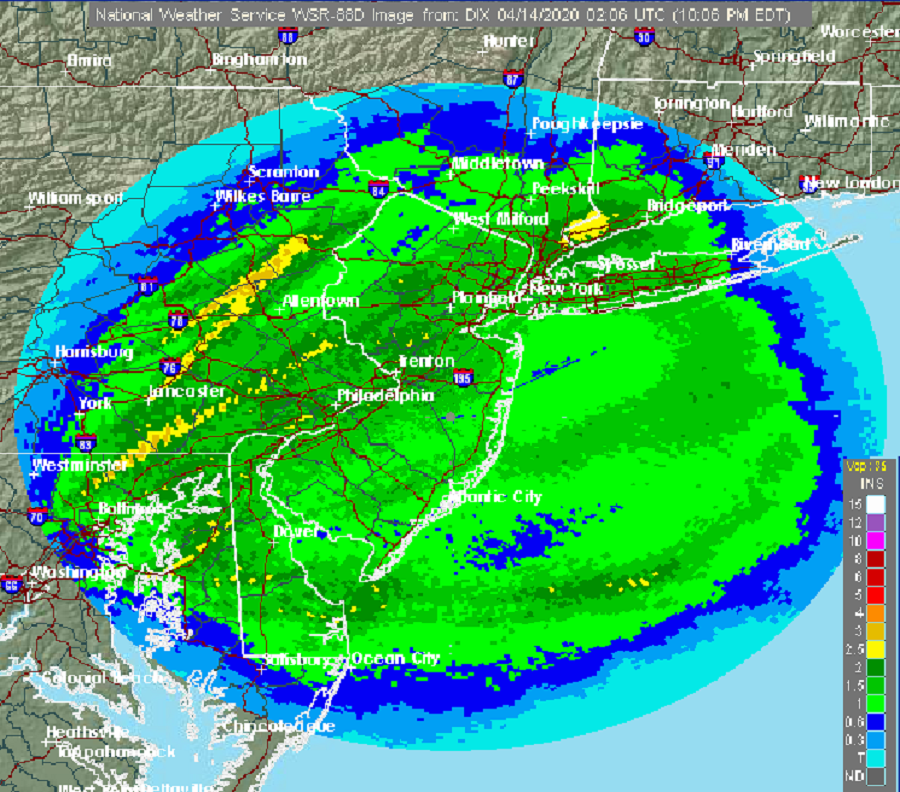
According to NOAA, in addition to the 122 NWS-owned radars, the full nationwide RADAR network includes another 37 radar sites owned by the FAA and Defense Department. NOAA’s NEXRAD radar program is a tri-agency effort with NOAA, the Federal Aviation Administration, and the United States Air Force. All of these RADARs help scan the sky and depict precipitation and wind for meteorologists to better understand weather conditions in real or near-real time.
During the downtime of the New Jersey unit, adjacent radars were available, including: KDOX at Dover Air Force Base in Delaware, KOKX managed by the New York City office of the National Weather Service, KBGM managed by the Binghamton office of the National Weather Service in New York, KCCX managed by the State College office of the National Weather Service in Pennsylvania, and KLWX which is managed by the Sterling, Virginia office of the National Weather Service. These weather service RADARs are supplemented with Terminal Doppler radars at airports at Philadelphia International, Newark Liberty, and Baltimore’s BWI.
