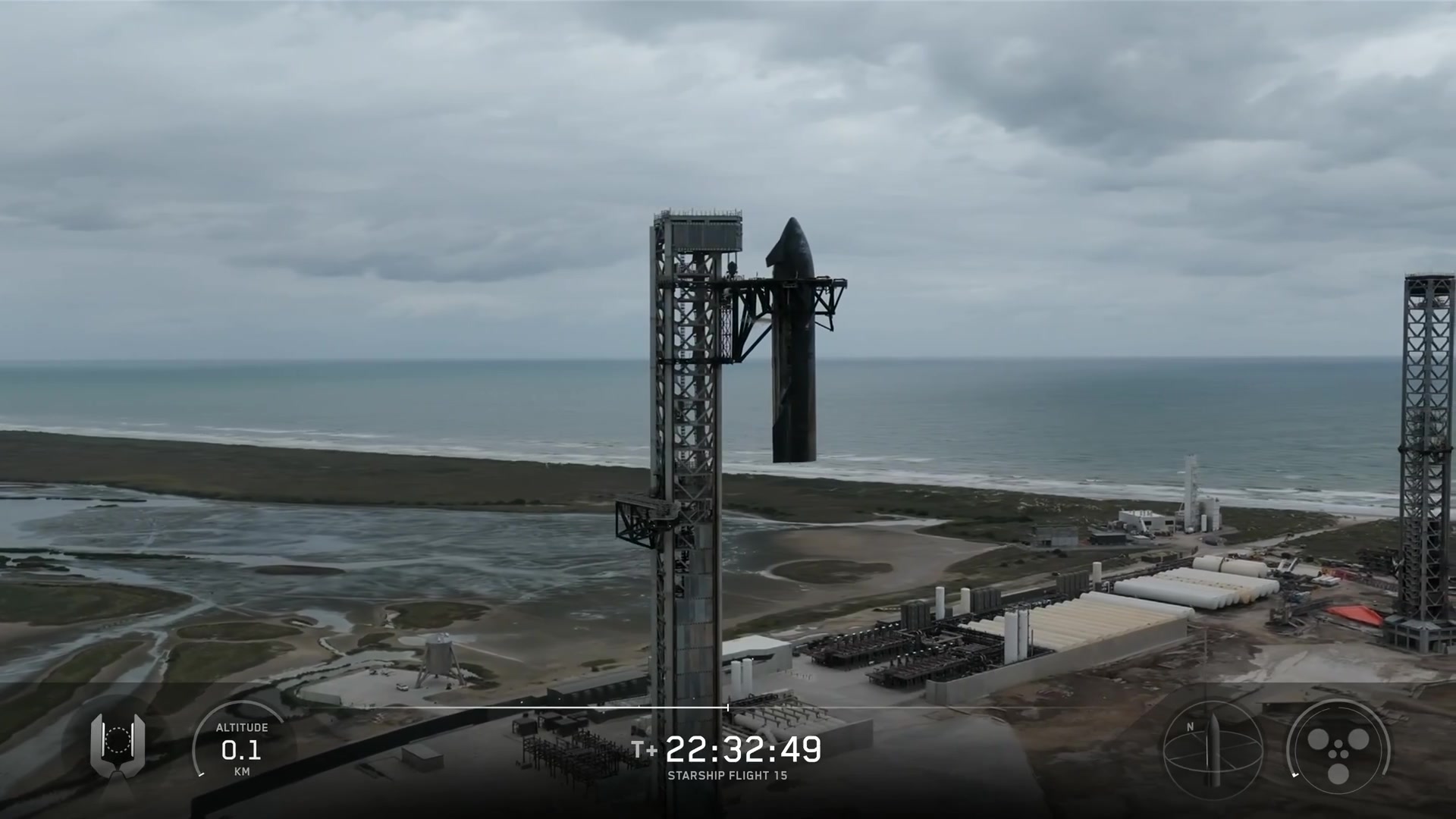
SpaceX caught the upper stage of its Starship rocket with the giant mechanical arms of its launch tower for the first time Saturday. The ship came back to the same South Texas pad it left about 22 1/2 hours earlier after a trip to orbit.
The company had hoped to catch both stages of the 15th Starship test flight and recover a full orbital rocket for the first time. That didn’t happen. The Super Heavy booster called off its own tower catch minutes after Friday’s liftoff and was destroyed over the Gulf of Mexico.
A First for the Upper Stage
Starship lifted off from Pad 2 at SpaceX’s Starbase site at 5:47 p.m. EST (4:47 p.m. CST) Friday, Nov. 13, according to Spaceflight Now. The company’s mission page says the booster rose on 33 Raptor engines before the ship separated and kept climbing on six of its own.
The ship returned Saturday afternoon. Spaceflight Now reported that it re-entered over the Pacific and flew across Mexico and the southwestern U.S. before turning out over the Gulf. SpaceX said it flew a final “swoosh” maneuver there before lining up with the tower.
“After breaking through the clouds, three Raptor engines ignited for a landing flip and slow descent into Mechzilla’s waiting arms, which closed to catch Starship for the very first time,” SpaceX wrote on its Flight 15 mission page, using its spelling of the tower’s nickname.
“Mechazilla catches Starship! Congratulations to the entire SpaceX team on this incredible achievement!” SpaceX posted on X moments after the catch.
SpaceX commentator Dan Huot was emotional as he described the moment on the company’s landing webcast, Space.com reported.
“That was the missing link,” Huot said. “That was the holy grail of spaceflight, plummeting through fire to be snatched out of the air by steel. We caught a Starship, and now everything changes.”
Many SpaceX employees went outside to watch the ship descend through the clouds, Space.com reported.
SpaceX founder Elon Musk posted Saturday evening, “The epic day has arrived, thanks to the incredibly talented team at SpaceX!” In another post that evening he summed up the program’s record so far: “Three booster catches and a ship.”
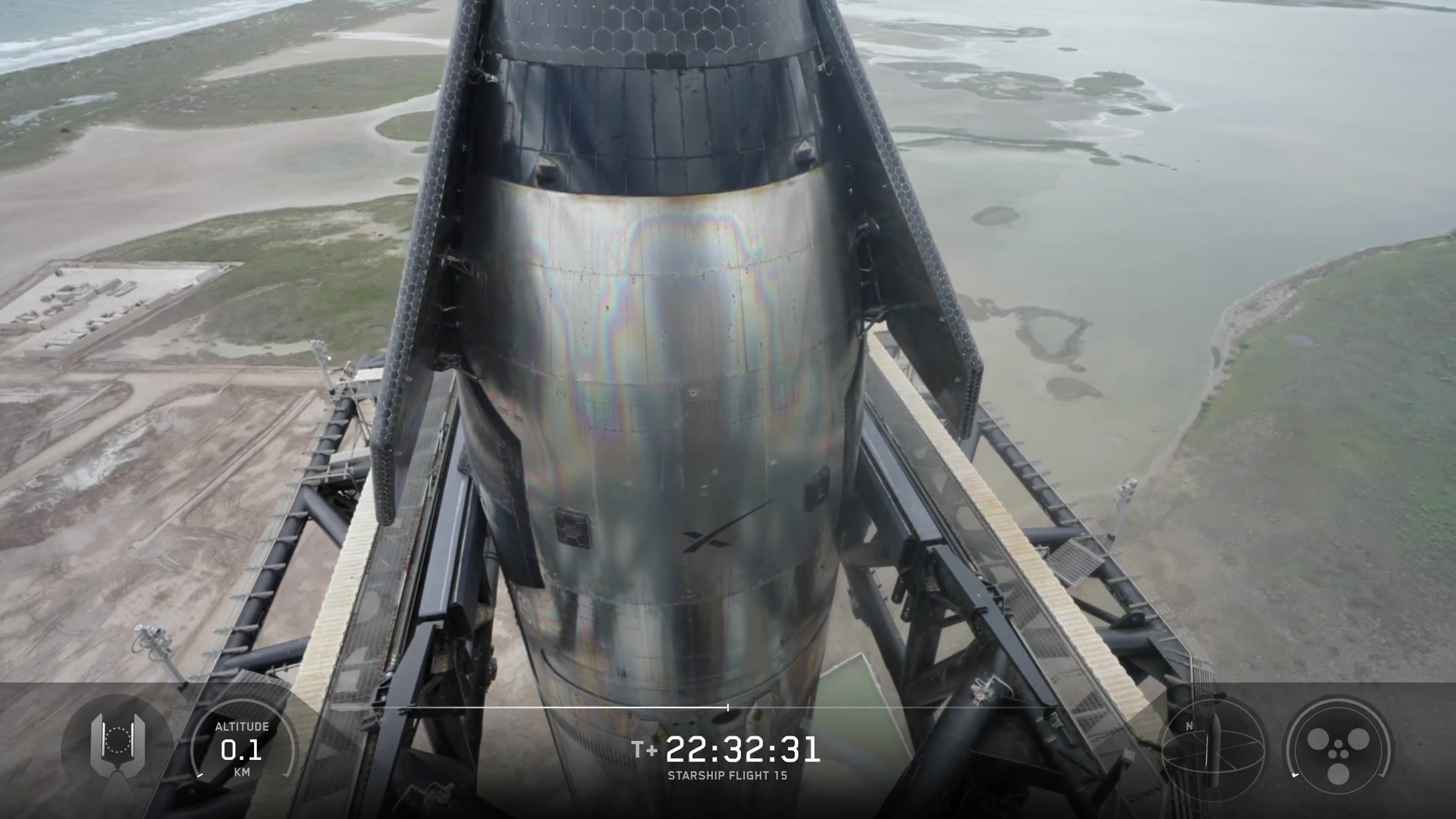
Image: SpaceX
Why the Ship Catch Matters
SpaceX has said it wants both stages of Starship to land back at the launch site so they can be inspected, refurbished and flown again quickly. The company said before the launch that recovering an entire launch vehicle “is considered the holy grail of rocketry.”
The upper stage is a harder target than the booster because it flies higher, farther and faster, Space.com noted. The booster lands minutes after launch. On Flight 15, the ship came all the way down from orbit.
Spaceflight Now described the catch as “a crucial step to making Starship a fully reusable rocket.”
SpaceX said it would try the catch only after checking the ship’s health in space, the BBC reported. Spaceflight Now said the company had backup options to end the mission early with splashdowns near Hawaii or Chile.
Space.com reported that some of the new Starlink satellites photographed the ship’s heat shield in orbit, and those images and ground-based cameras showed the vehicle was in good shape. SpaceX announced Saturday afternoon that teams had “polled go to return Starship to the launch site,” and the ship fired one Raptor engine for its deorbit burn.
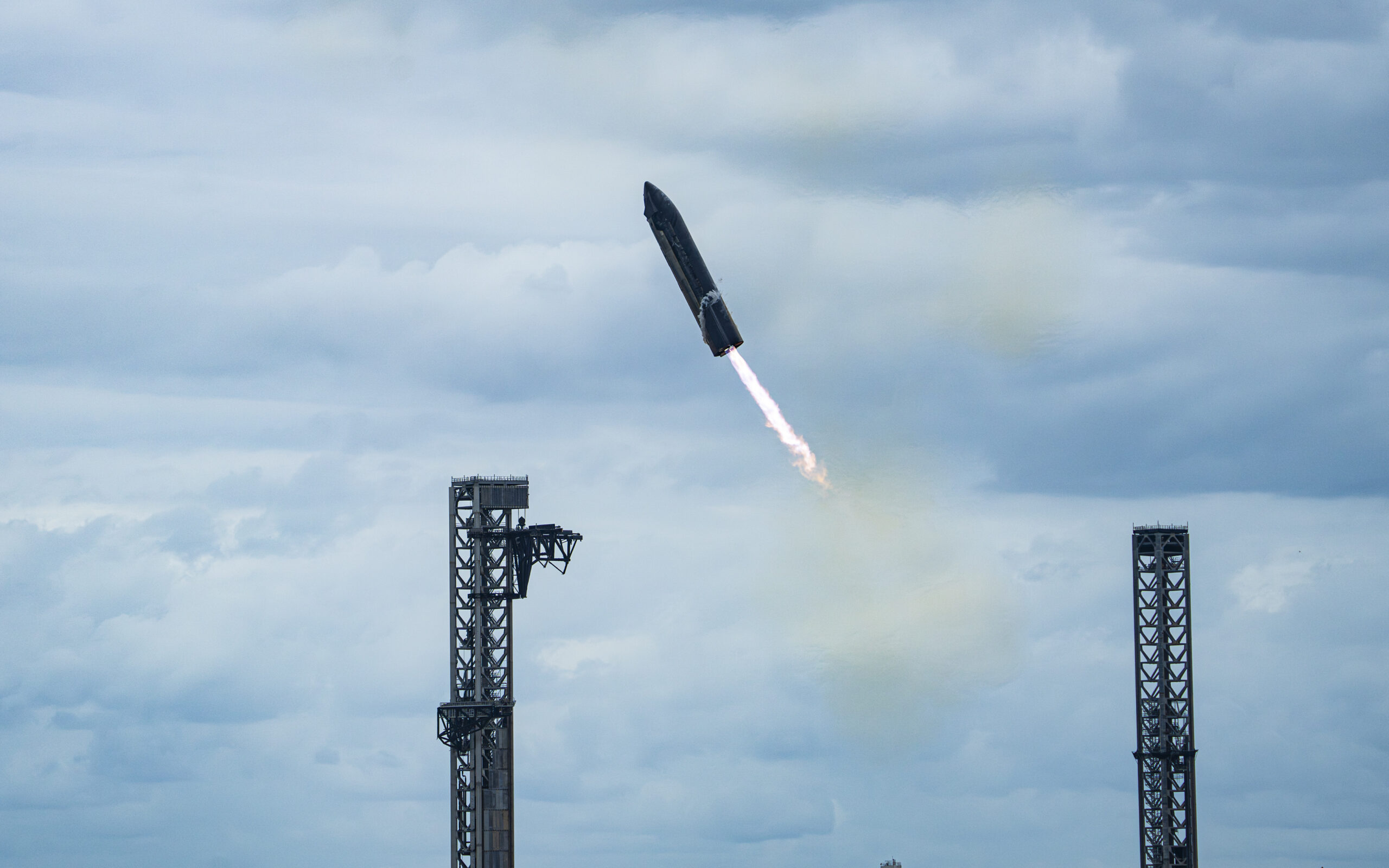
Image: SpaceX
Booster Aborts its Catch
The day did not go perfectly.
The flight plan called for Booster 22 to return to Pad 2 about 6 1/2 minutes after liftoff. Instead, SpaceX says the booster relit 32 of its planned 33 engines for the boostback burn, which “ended early due to low fuel mass, with the root cause under investigation.”
According to the mission page, the booster’s guidance, navigation and control system then triggered an automated abort and steered the rocket to an offshore landing spot. It fired its landing burn and hovered over the Gulf, and its flight termination system was triggered when the engines shut down.
Huot first blamed a guidance problem, then corrected himself Saturday.
“I did a disservice to our booster GNC guys last night. It was not a GNC issue that caused us not to come back,” Huot said, according to Spaceflight Now and Space.com. “GNC triggered that abort. It was doing what it was supposed to do, basically detected that the booster was not in the place that it was supposed to be to proceed with the catch, did an automated abort, and then headed out to that offshore splashdown location.”
SpaceX’s Kate Tice said during Saturday’s webcast, “Early indications are that the booster ended its boostback early due to a low fuel mass alarm,” Space.com reported. “The team is still investigating the root cause on that.”
Musk wrote on X Saturday morning that the “booster was slightly low on fuel.”
The Associated Press reported that wreckage remained in the Gulf of Mexico, cordoned off by buoys, as the ship returned Saturday.
The Federal Aviation Administration issued a revised license on Nov. 13 authorizing a single Flight 15 launch and the ship’s reentry, Seeking Alpha reported. As of Sunday, no FAA statement on the booster’s loss or on whether it would require a mishap investigation had been found.
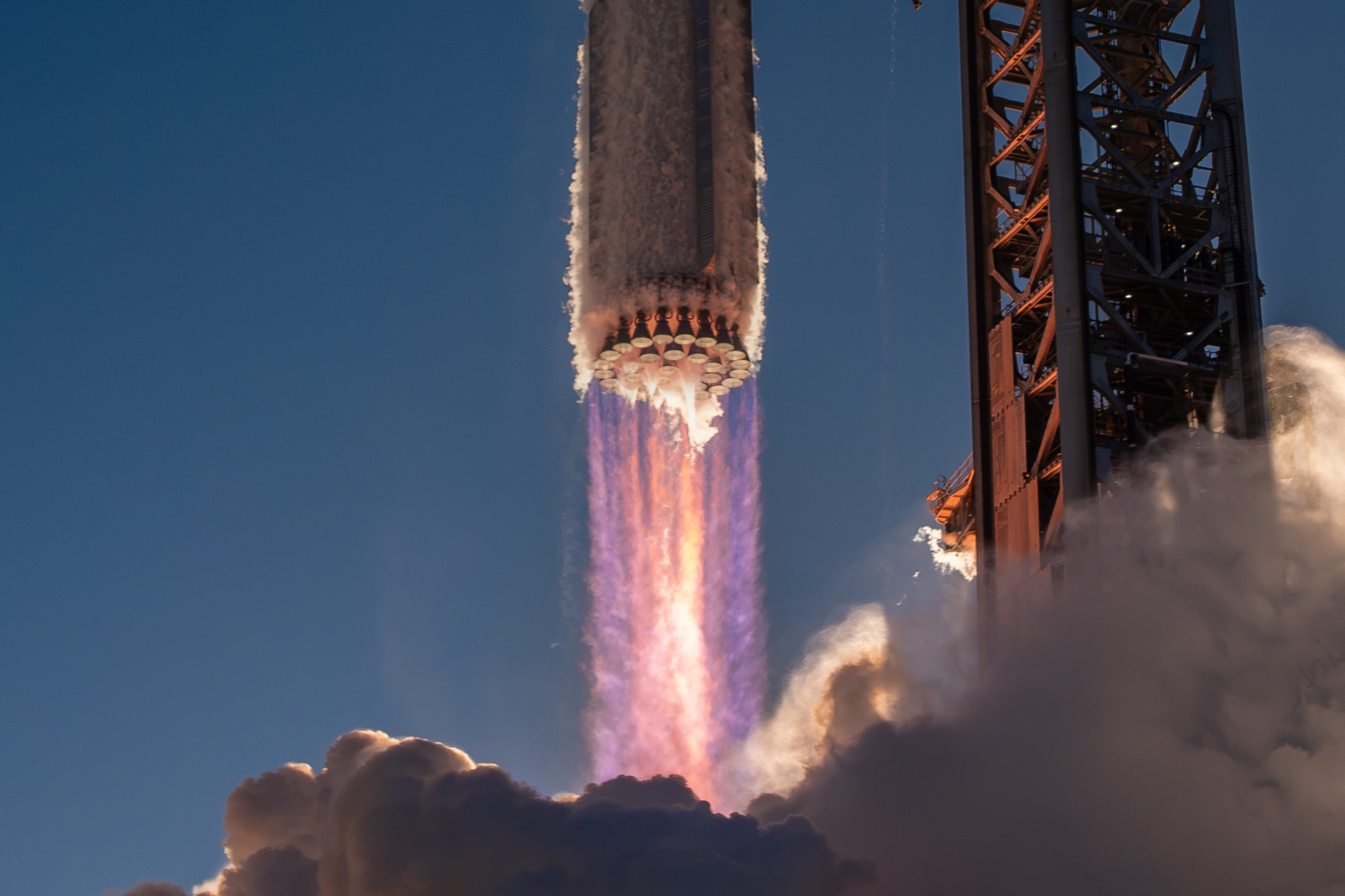
Image: SpaceX
Orbit and Starlink Deployment
After separating from the booster, the ship finished its ascent burn and briefly coasted on a suborbital path. It then relit a single Raptor engine to reach an orbit of about 275 kilometers (about 170 miles), according to SpaceX’s posts during the flight.
It began releasing 26 Starlink V3 satellites about 40 minutes after liftoff, a sequence SpaceX said would take about 42 minutes. SpaceX said contact was made with every satellite and that they were already raising their orbits.
The ship then spent more than 20 hours in a long coast around Earth. SpaceX says it completed 14 orbits before the deorbit burn.
What’s Next
SpaceX first caught a Super Heavy booster with the tower arms in October 2024 and has done it three times. It has not yet recovered both stages from the same flight.
Space.com reported that the company is likely to try the double catch again, probably on the next Starship flight. SpaceX has not announced a date for Flight 16.
Before the launch, Musk said on SpaceX’s third-quarter earnings call that “success is not guaranteed on these first flights, but I’d say it’s more likely than not that this succeeds next flight,” The Verge reported.
